

Tell A Vision: A Q&A on the Decisions Behind the Show
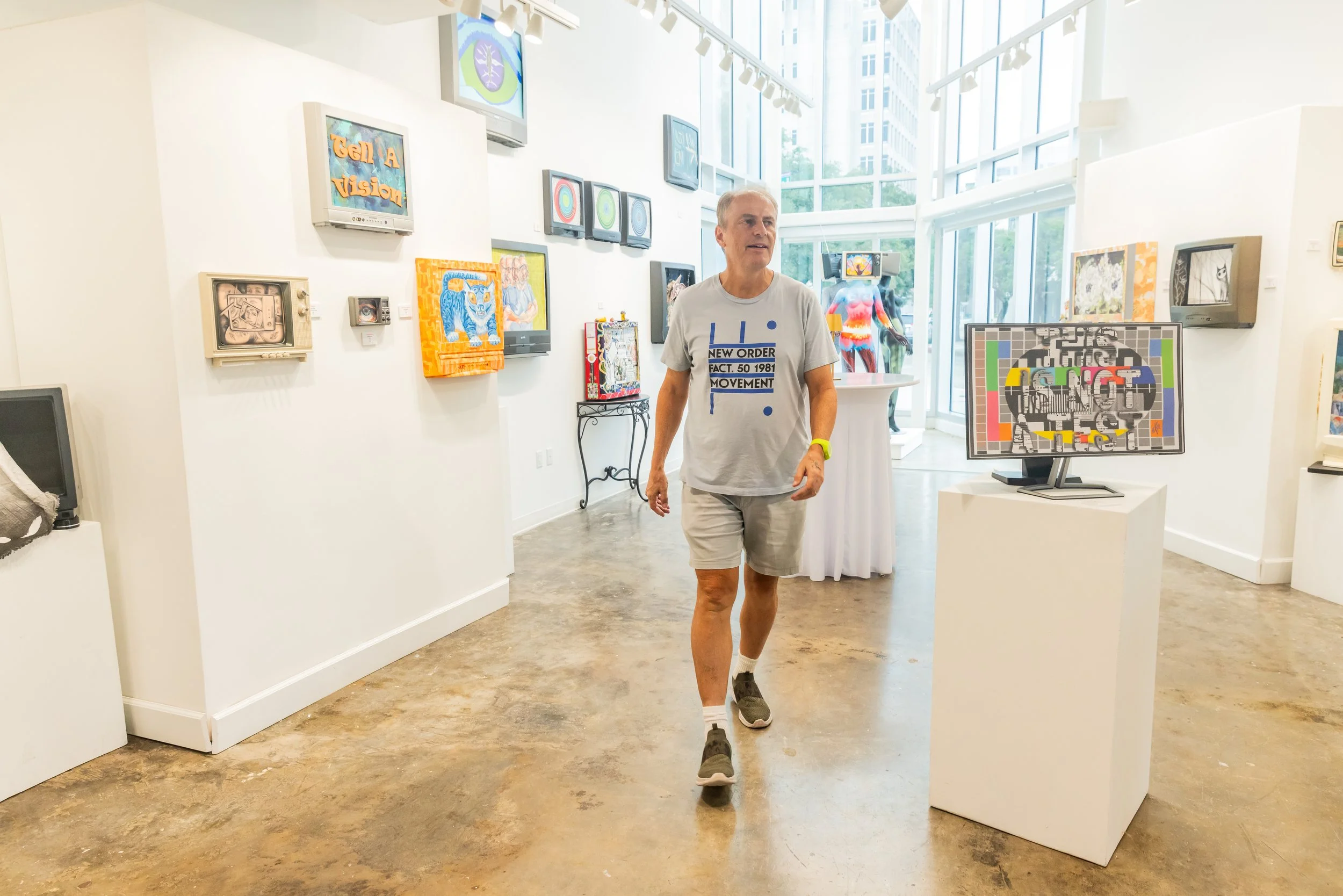
It started with Jay Schwarzhoff's vision. For years, he collected abandoned tube television sets, most of them pulled off roadsides and out of hoarder houses, long before he knew what any of it would become. That vision eventually led him to invite 21 artists into the project, and he worked to connect each one to the TV that fit their own vision for their piece in the show. Carolyn Schwarzhoff had a front row seat to the process and left her own mark on how it came together.
What follows isn't really about the TVs. It's about the small calls made along the way: what got kept, what got cut, when to step in, when to step back, and what it actually took to get from a pile of parts to a gallery that ended up full.
The details behind a decision are the heartbeat that brings this vision alive. Knowing why and how these intimate calls got made gives the rest of us something to reflect on in our own process, in the decisions we make and the reasons behind them, and in what it actually takes to carry our own vision into something real.
Much thanks to Jay and Carolyn for taking the time to answer these questions and giving us an inside look at the decisions that were part of bringing this show to fruition, giving it life.
If someone in Louisiana is sitting on their own pile of "old TVs" right now, a stalled idea taking up space, no sure use for it yet, what would you tell them about how you finally knew what to do with yours? Or how did this idea come to be?
Jay Schwarzhoff
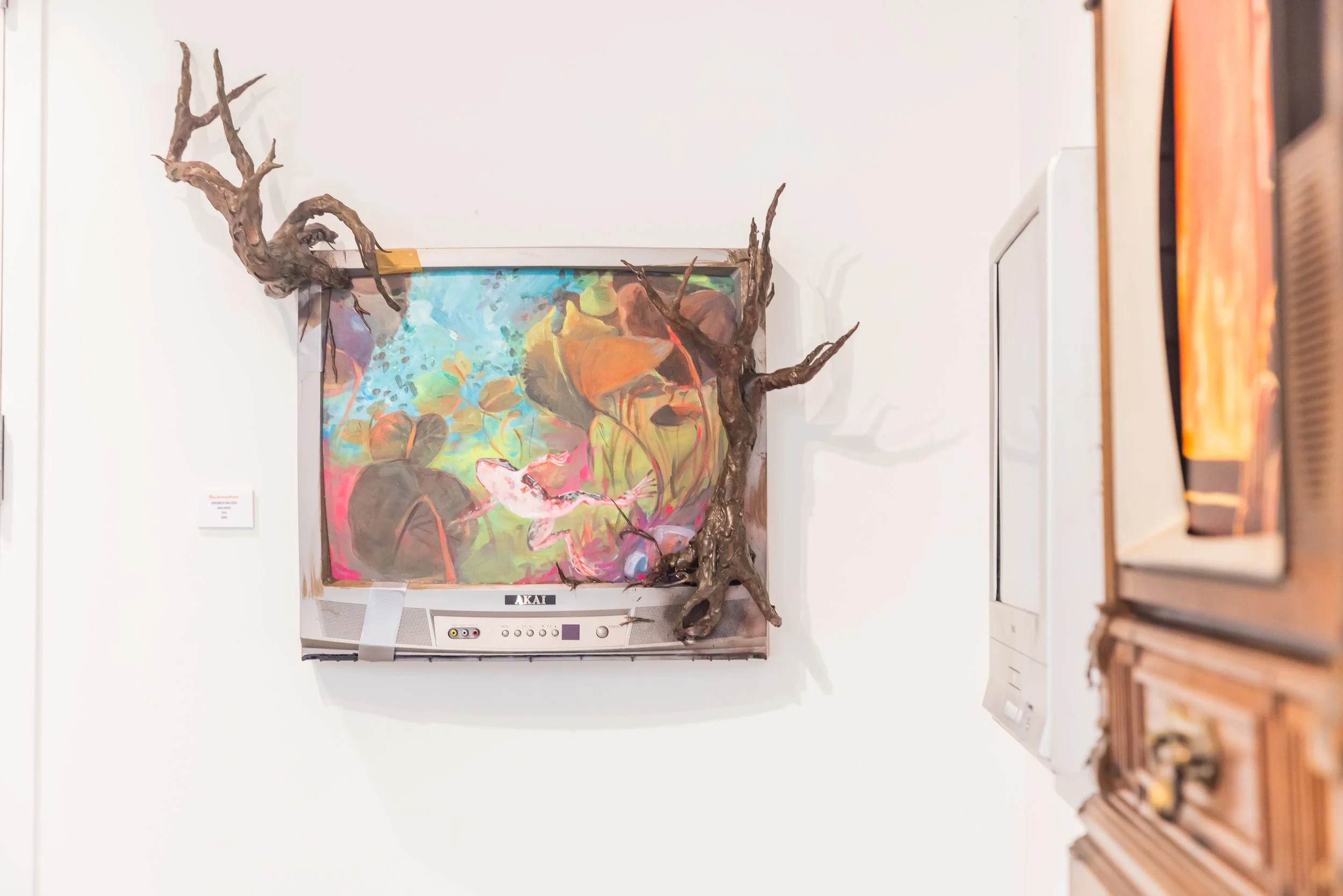
The first one we did was a long time ago, using Carolyn's old dead college TV and a painting from our friend John Guillory that just fit it perfectly. It was just a quirky thing. Years later I started seeing the old tube TV's on the side of the road as everybody switched to better flat screen TVs. I've got 5 TVs with art in them that weren't even in the show, that predate me giving out the TV frames to the artists. But I just kept finding more and more TV's, it just seemed like giving them away was the only way to keep up.
In fact, I did get some of these TVs from people who were sitting on a pile of old TVs. Several were from hoarder houses, which was fun. Some were from people that were stuck on their own art project, where they wanted to have a collection of functioning, but old, TVs. In their case, technology is not their friend, and the frustrations led to them quitting. I'd love to be a super motivational person and tell them to keep on their dreams, but I have to say they probably made the right choice by at least moving on from that technology for that purpose.
A recent source of TVs has been movie prop warehouse sales. I bought Hulk Hogans TV's. They were already hollowed out so he could apparently throw them at bad guys. I think they did that because they are pretty busted up. Two of the items in the show are actually on flat screen computer monitors. I've had some artists tell me that they are flat out stealing that idea. You can get a self standing computer monitor actually cheaper than a picture frame at almost any thrift store, if you have to buy one.
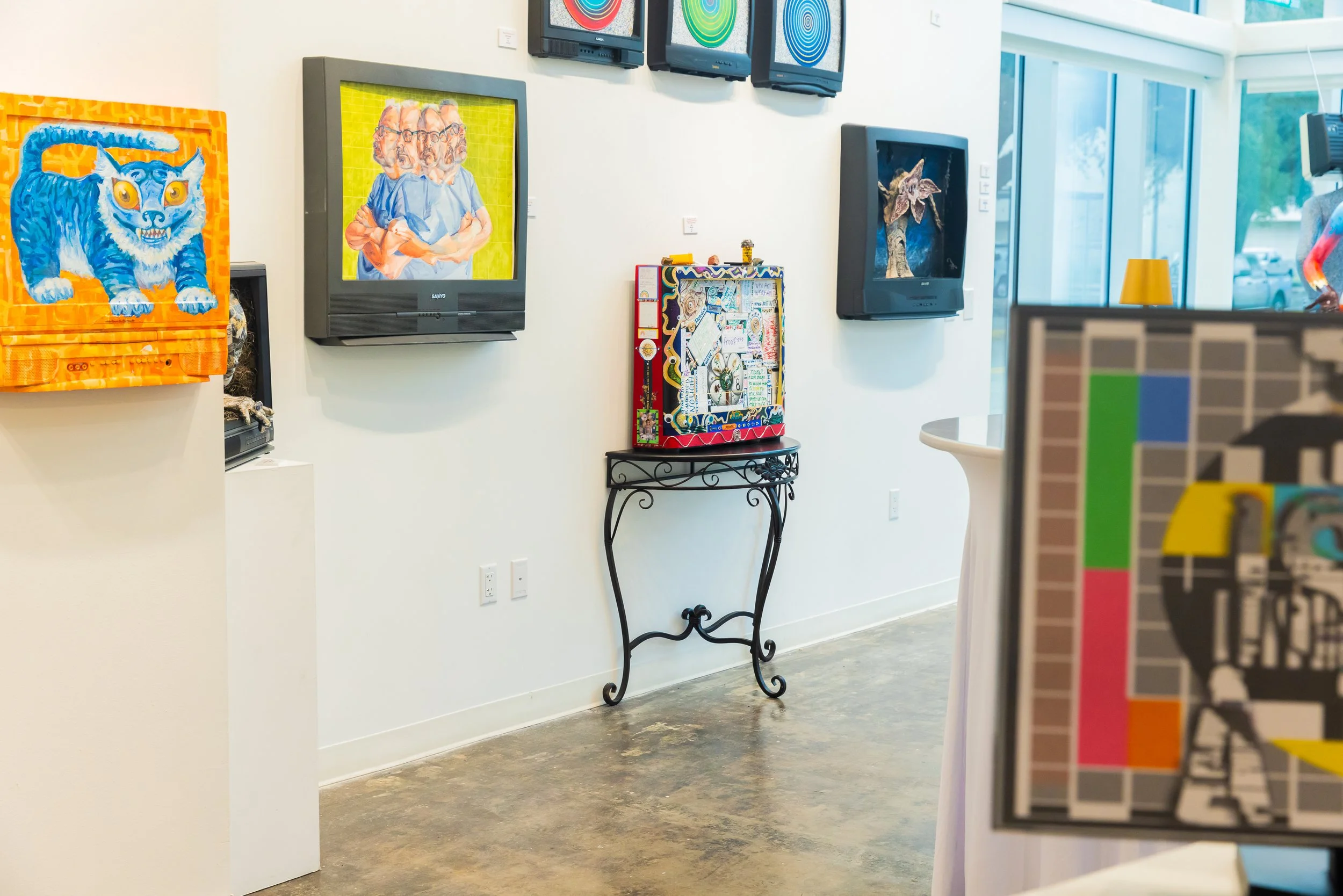
I'm not sure what advice I'd give someone else. But if someone is partial to repurposing, keep in mind that people love the idea of reclaiming something that is spent, but they don't want taped together garbage. It still has to meet all the other aesthetic and artistic qualities.
What did you notice about how things were decided, especially in the moments that didn't have a clear answer yet?
Carolyn Schwarzhoff
I think that after his 34 year career as a chemical engineer, Jay is used to people expecting him to be a decision maker. There were many times Jay asked the artists for feedback and he used the feedback often, but ultimately he knew this project was his baby with his name on it, and he had to make decisions based on what HE thought would work best and what HE had time to do.
Twenty-one artists means twenty-one different instincts. How did you decide when to step in and guide someone's piece versus when to step back and let them run with it? Or did you? What did you tell them? Why did you choose the way you led and curated this collection of artists the way you did?
Jay Schwarzhoff
Over half of the artists are friends from painting parties. At these parties, we all get together and paint on the same canvas, and it is fun to see what happens. But I was very clear from the start that while this was an overall group effort, the items were to be done individually. We still spur each other on creatively, but to see someone in their work it needs to be just the one person for each item.
A few people needed help. One person who was mentally blocked, we just looked through what they had already made and found something that was perfect for a TV frame. Others needed more time, which I was flexible on as long as it wasn't going to interfere. And others needed suggestions on how to make what they were trying to do just look a little better. I never wanted to interfere in their creative process and their vision, but if it needed help I would either provide it or suggest it.
You clearly didn't guide everyone the same way, more hands-on with some, more hands-off with others. Why that approach, instead of one set of rules for the whole group?
Jay Schwarzhoff
I've probably already covered this, but additionally, these artists are friends first, and that fact doesn't change with this show. We all know our different friends need different attention.
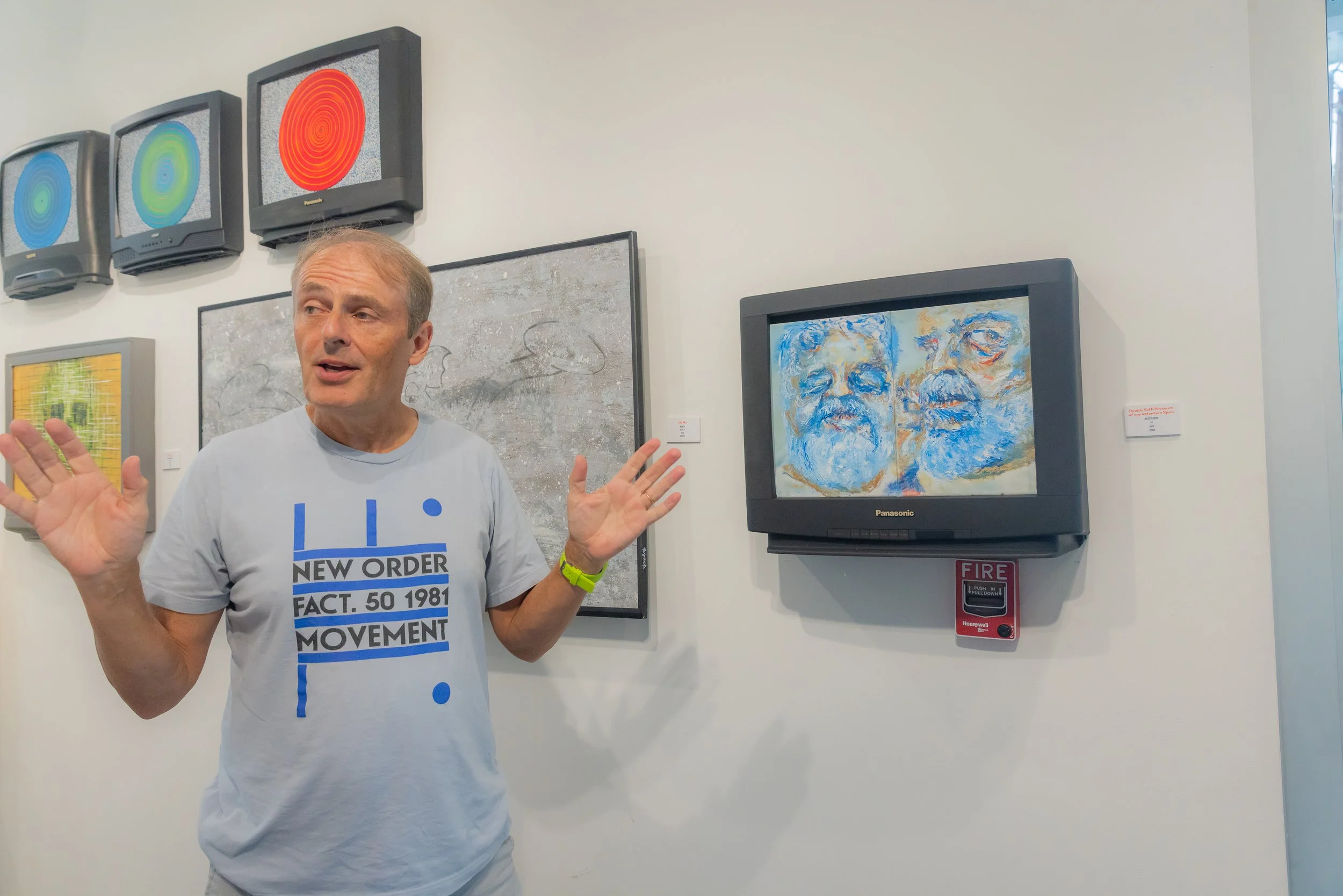
Watching this go from collecting TVs to a gallery show, what's a decision that got made along the way that surprised you, one you wouldn't have guessed needed to be made?
Carolyn Schwarzhoff
I think it was super hard for Jay to limit the number of contributors to the show, because we know SO MANY great artists who do so many types of art in Baton Rouge. The main group that became contributors were the group of painters who welcomed us to their painting parties starting a few years ago, even when we didn't have much skill and weren't sure at first how to contribute.
In a lot of ways this exhibit was Jay's way of thanking them for bringing him into their artist group and allowing him to learn and contribute in his own way. It was a natural progression for Jay to hand out his TV casings that he had crafted to those same artists first, to see what they could do with them. Plus we had watched what they could do and were blown away by their talent!
Once he got the gig at the Shell Gallery and realized the limits of the space there, he realized he already had full exhibit and would not be able to include many other artists beyond that painting group. I think it was hard for him to not be able to invite other artist friends to participate, once they got wind of this project. Fast forward to the exhibit, and it was tough to fit everything we already had. That gallery is full!
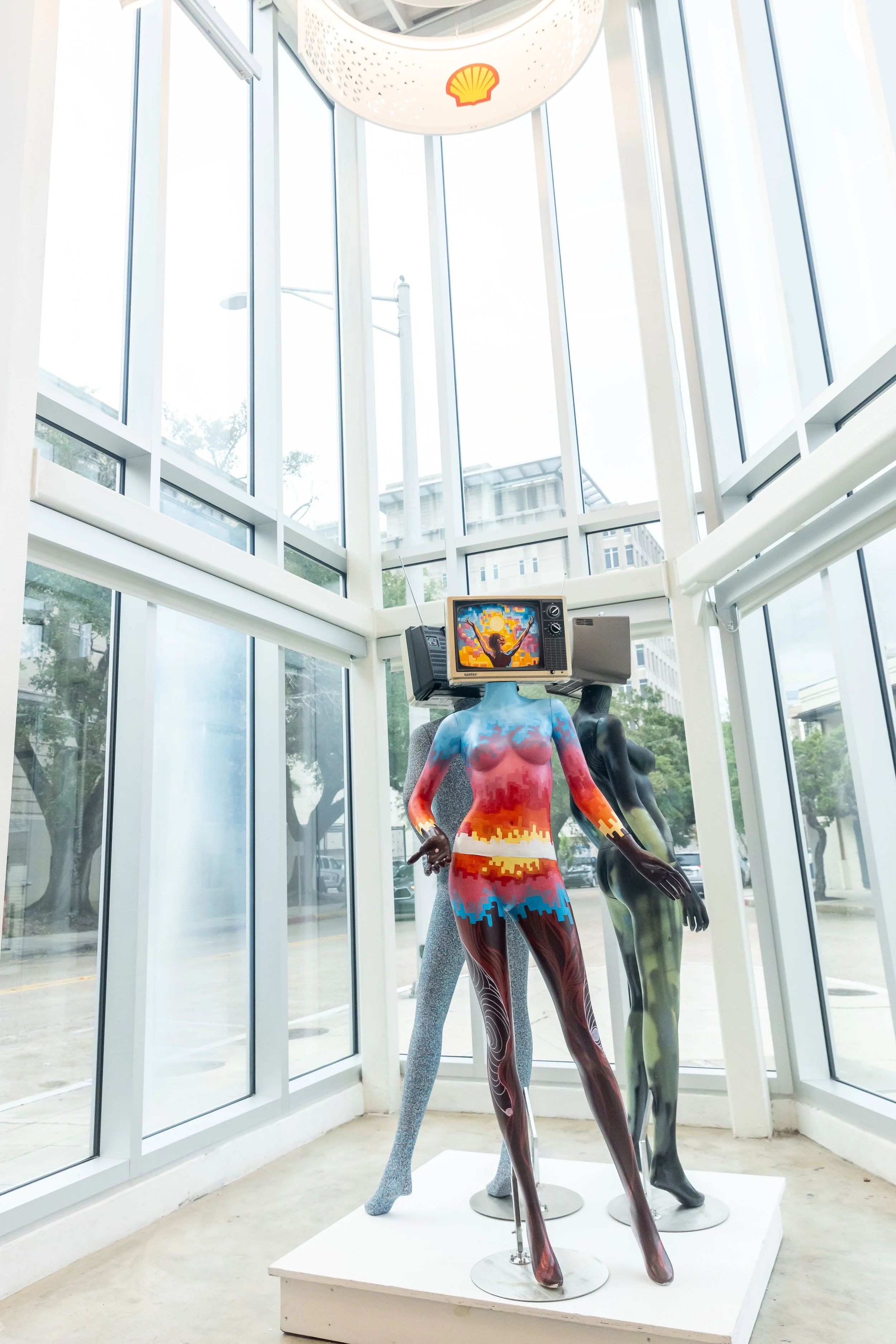
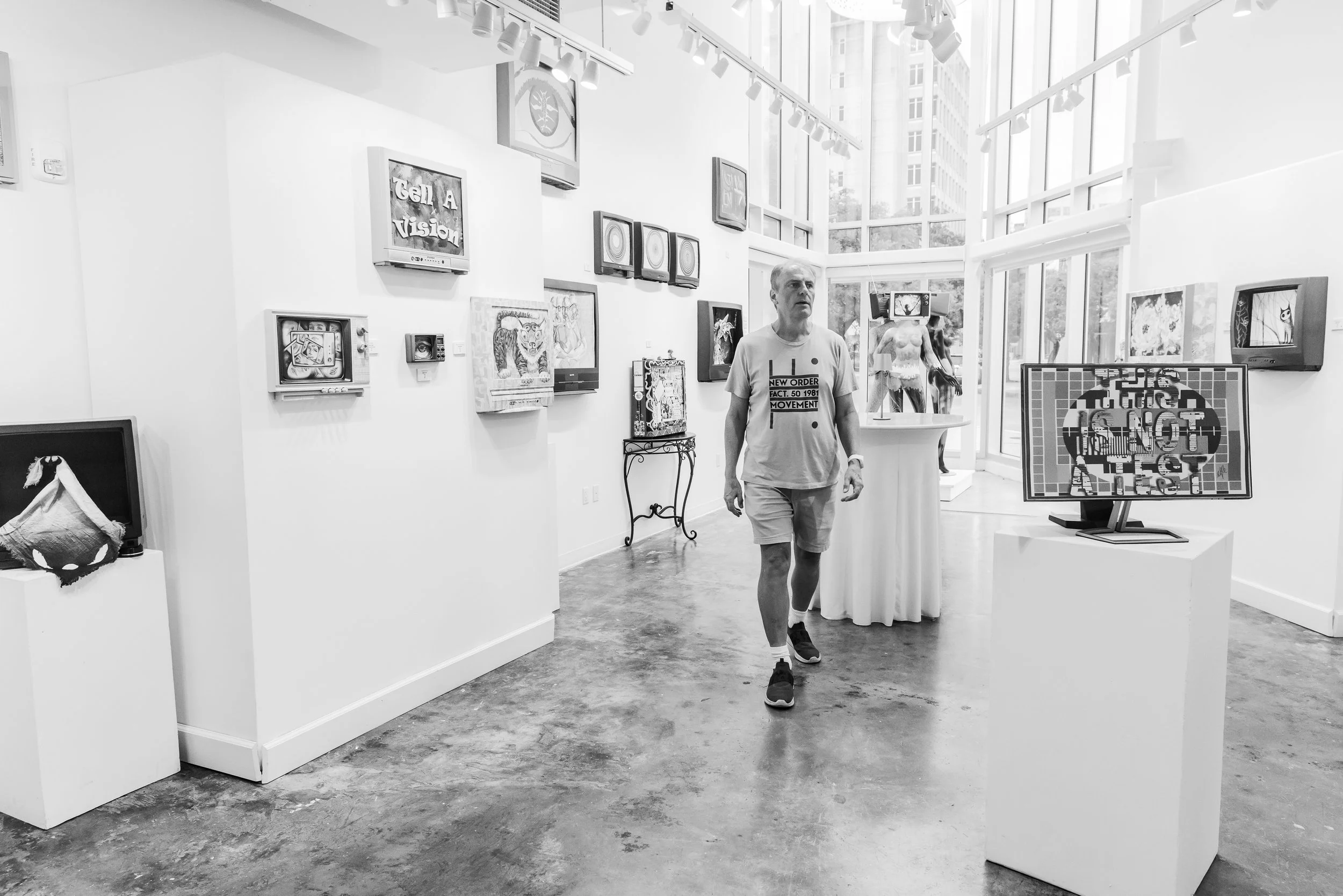
Was there a moment during all this where you could tell Jay was about to change course before he said anything out loud? What tipped you off?
Carolyn Schwarzhoff
It was pretty cool watching Jay's process on all of this. I feel like he thought about this TV project for months before he talked about it. He likes to have all of his ducks in a row before he presents ideas, even to me. He has a LOT of time to think about things on those long bike rides that he takes!
I'm not sure if he really changed course, but once he realized he could submit a proposal to the Shell Gallery at the Arts Council, I think he went from dreaming small to dreaming bigger!
Looking back, is there a decision in this exhibit you'd make differently today, even though it worked out fine at the time?
Jay Schwarzhoff
At some point, I realized I needed to set a deadline. Originally, we were very loose with the timing. I chose to wait on that because I didn't want to seem harsh or impede the creative process, but it became obvious that was going to be a failed strategy. So I set a deadline for the artists to finish by, and the date I set was exactly the same as one I would set all over again, but since several months had passed between thinking I needed a deadline and actually setting the deadline, it created more tension than it should have. Sorry.
As soon as I found out we were accepted and had dates for the show, I should have figured out a deadline and announce them to the group together.
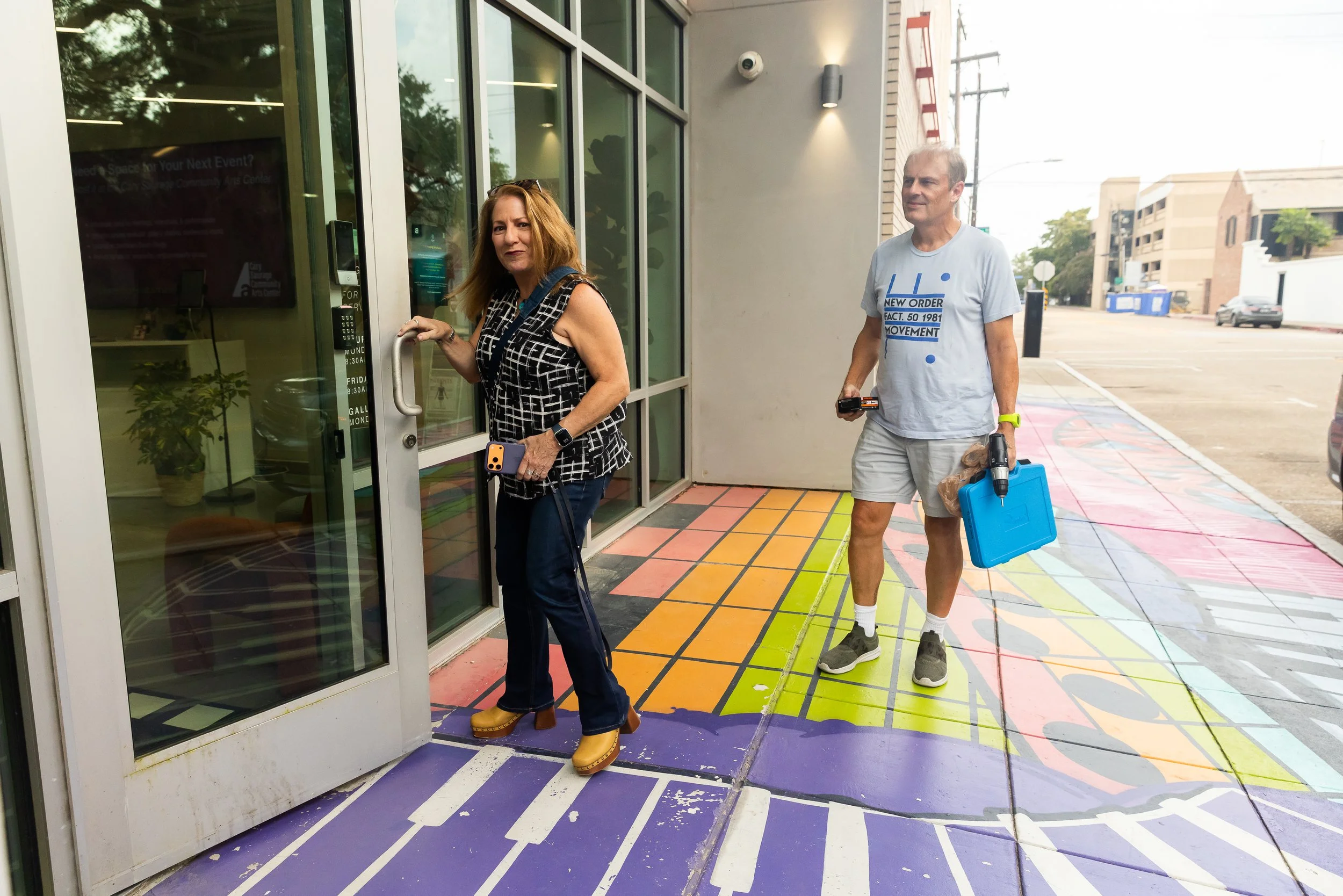
How did you know a piece, or the show as a whole, was ready, when there wasn't really a rulebook for "abandoned TV art"?
Jay Schwarzhoff
Early, I could see from the work in progress that the quality was there. And those that had not started as early definitely were inspired by the artists that already finished. I never worried, or even got involved, about the art being created. They made the show, if I can say so, as awesome as it is. Self-motivation is the best motivation, and it was ready when the artist said so.
When we invited everyone over to our house to pick out their TV frame, I told the group: This isn't a trick to fill my living room with all your art work. This is yours, and when this is all over, it will be yours. All along, I was just excited to see what this group would come up with. I wasn't going to poison the well with any preset ideas.
Walk me back to a TV that almost didn't make it into the show. What shifted your mind, and what were you leaning on to decide? Or you can even comment on the TVs that did become a piece of artwork?
Jay Schwarzhoff
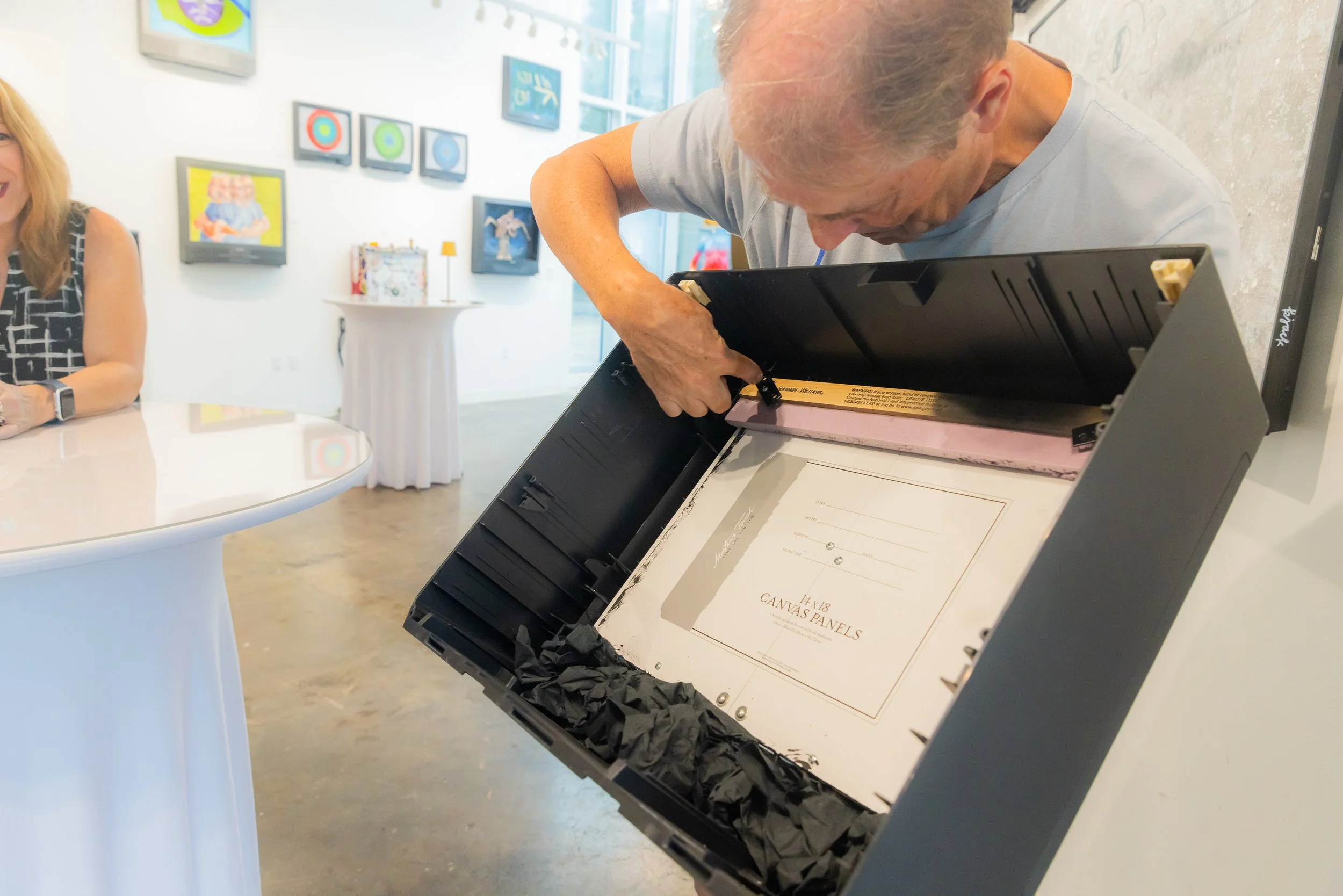
I left a couple of my own items out of the show, but my promise to the group was that if they got their item back to me, it was in. The only work I thought I was going to have to send back was one that fell apart and I just thought it was too much for me to do to rebuild it. But I gave it some thought and screwed the vitals together (they were previously attached by pushpins), and then tightly secured it to the TV frame, and then it was sturdy and looked better as well.
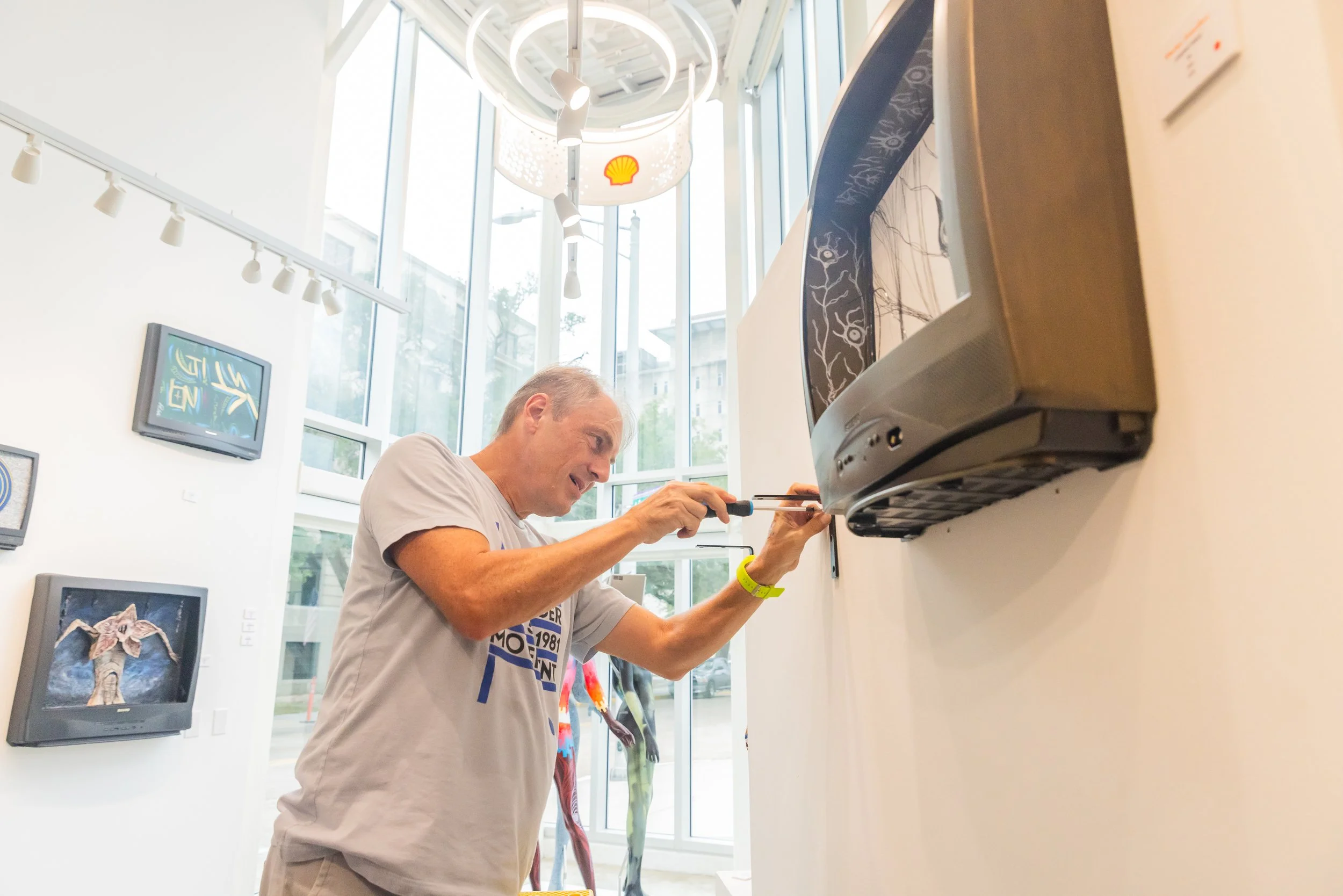
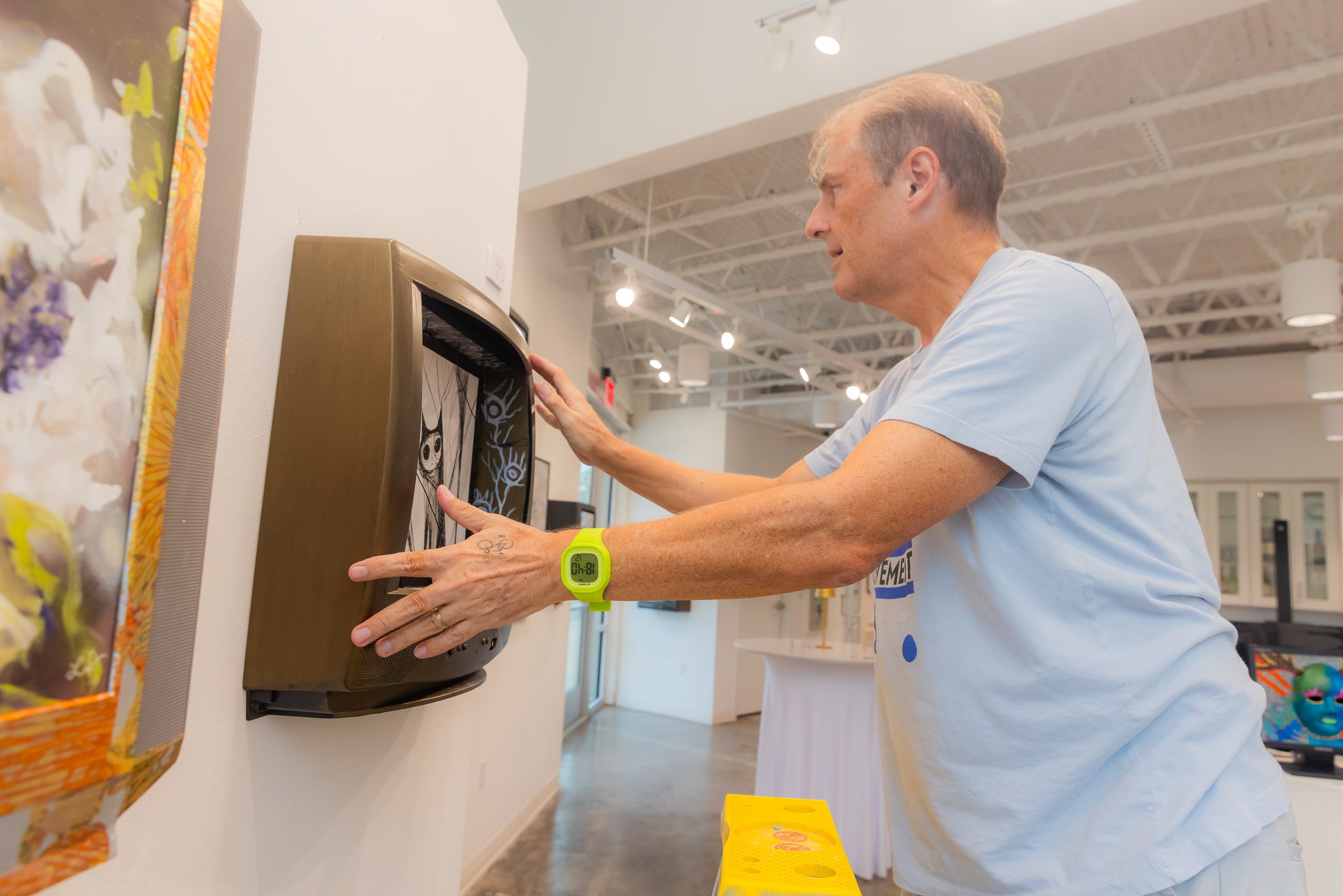
That was the most I had to work to improve the final product, but it was not unusual for me to perform modifications or adjustments so they would hang better or sit more flush against the wall. These are all unique non-standard items that needed special solutions. Out of the 36 items in the show, I think only 4 did not need post-production help of some kind.
When you were working on your own pieces, was there a moment a TV told you something different than what you walked in planning to do with it? What did you do with that?
Jay Schwarzhoff
When you take apart a TV, the front is sometimes the perfect depth to be a TV frame, but often it is much deeper than I would like. Originally, I was going through a difficult process of cutting off the extra depth, harder than it sounds because the cuts of bendy and brittle plastic have to be straight and go all the way around.
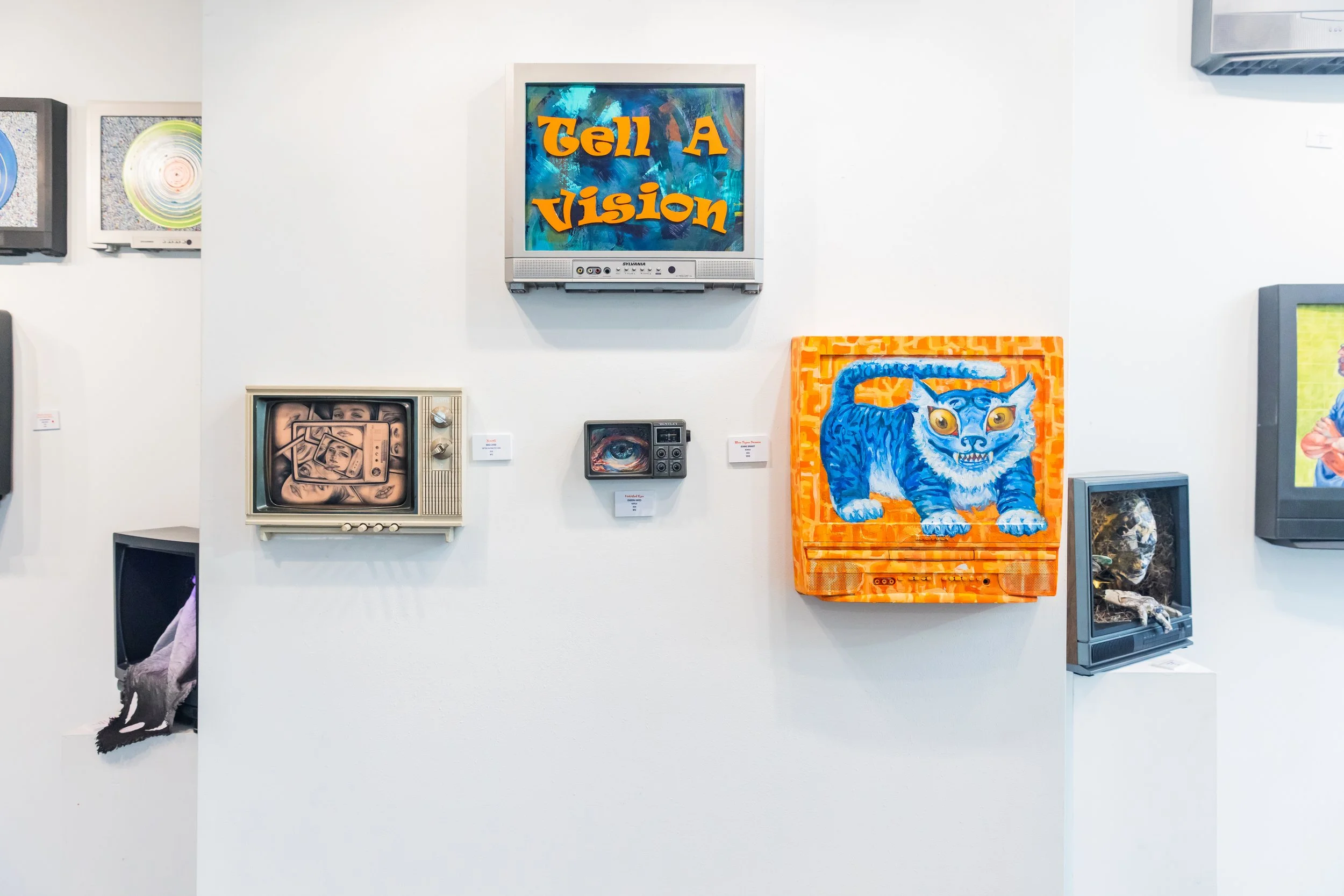
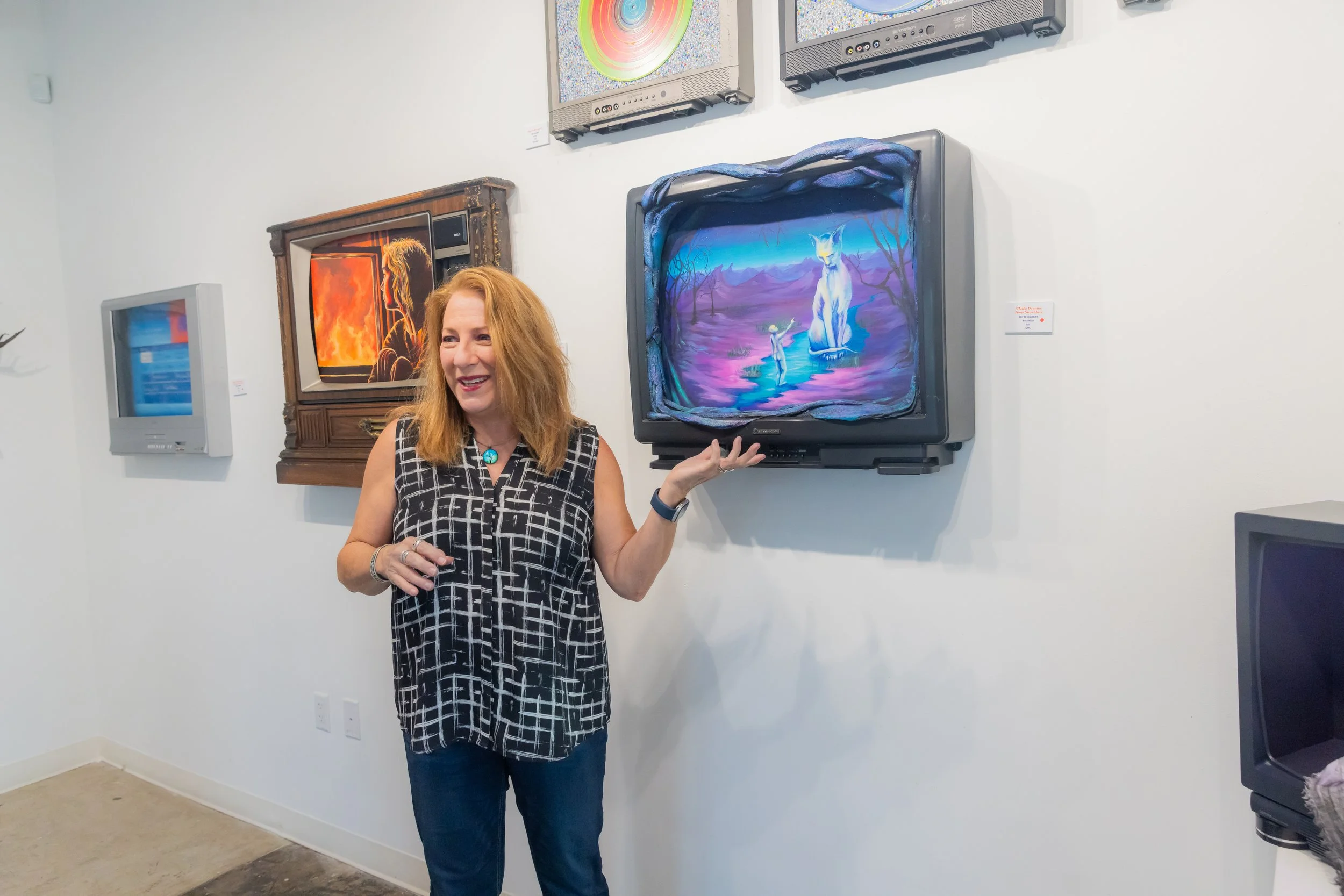
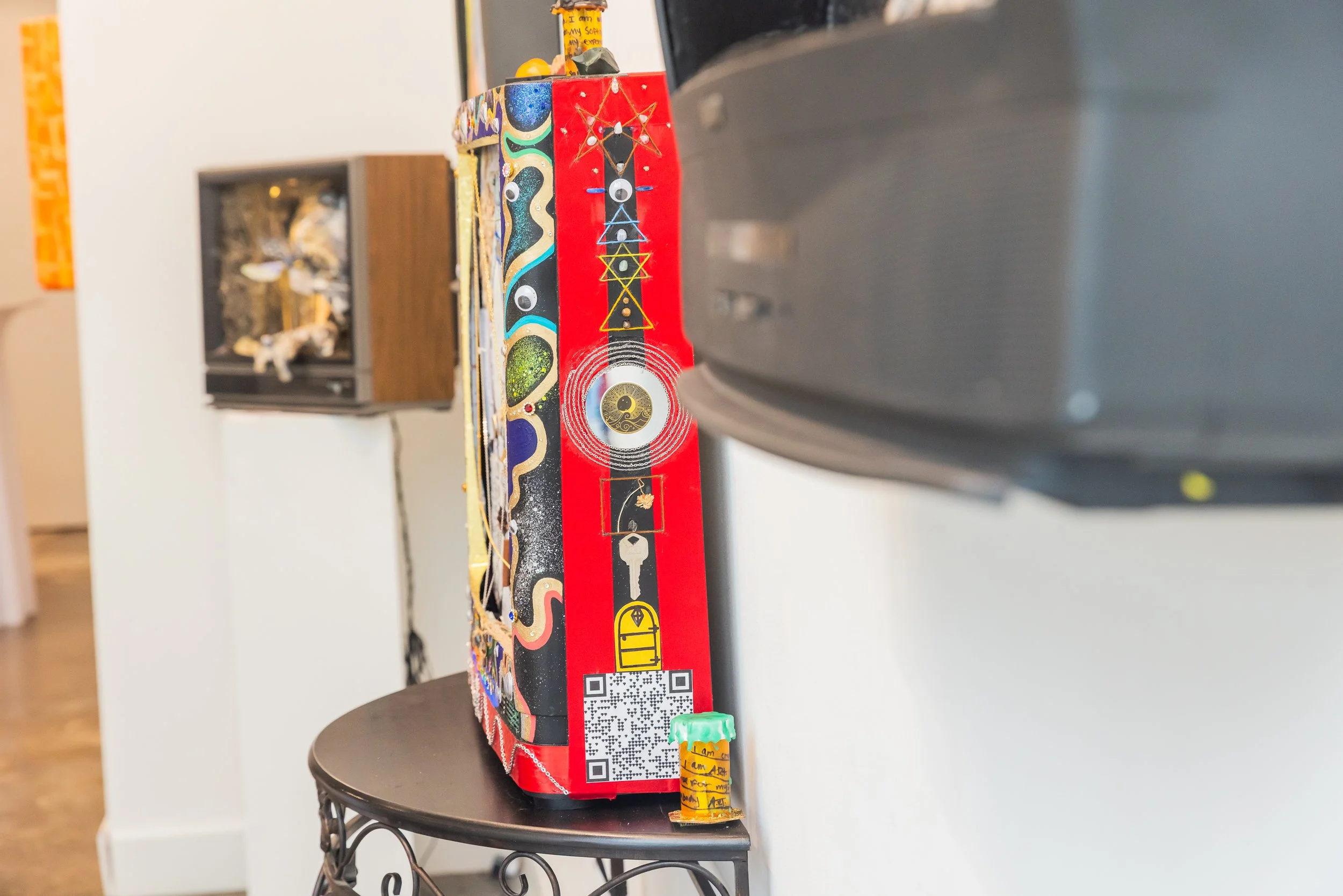
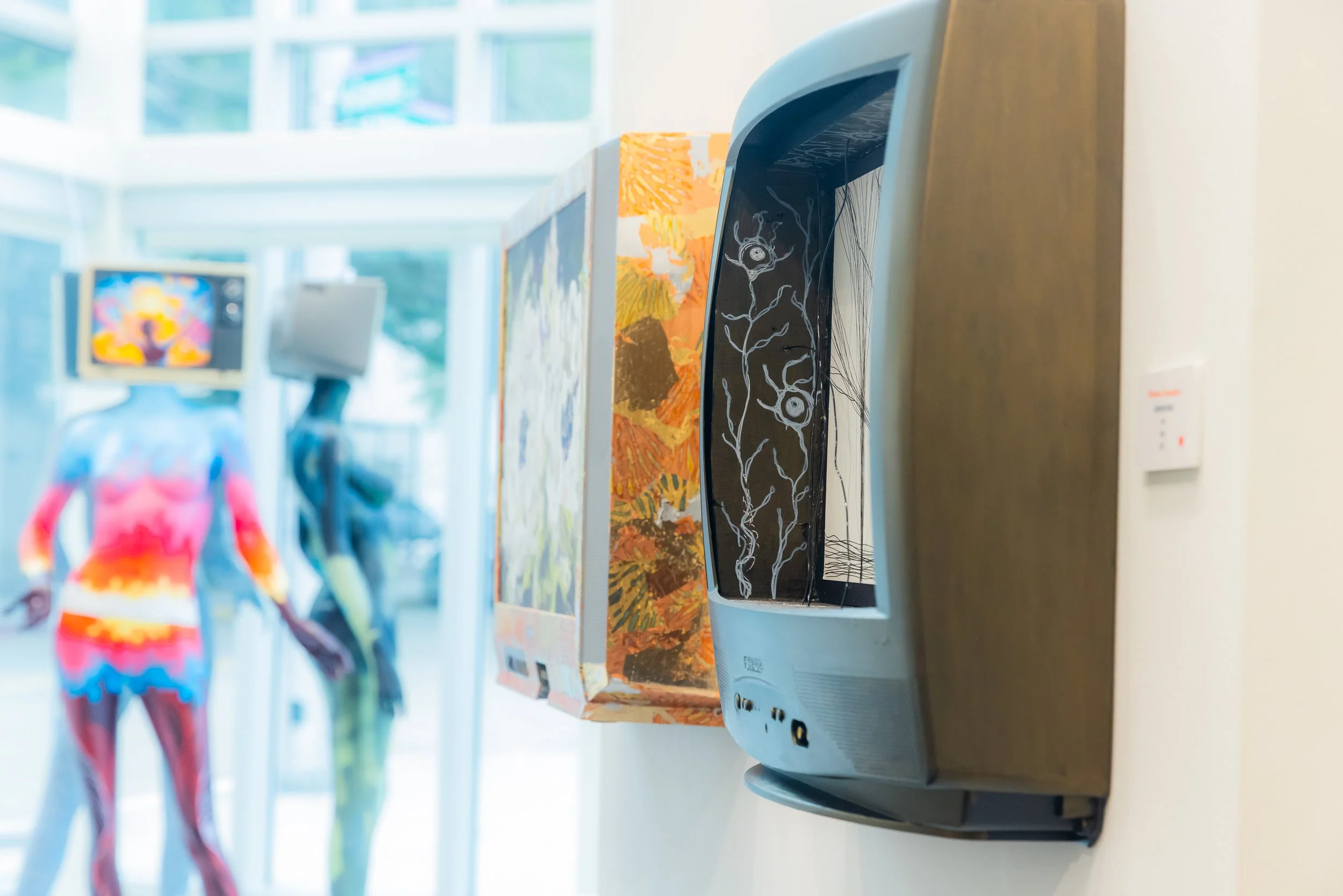
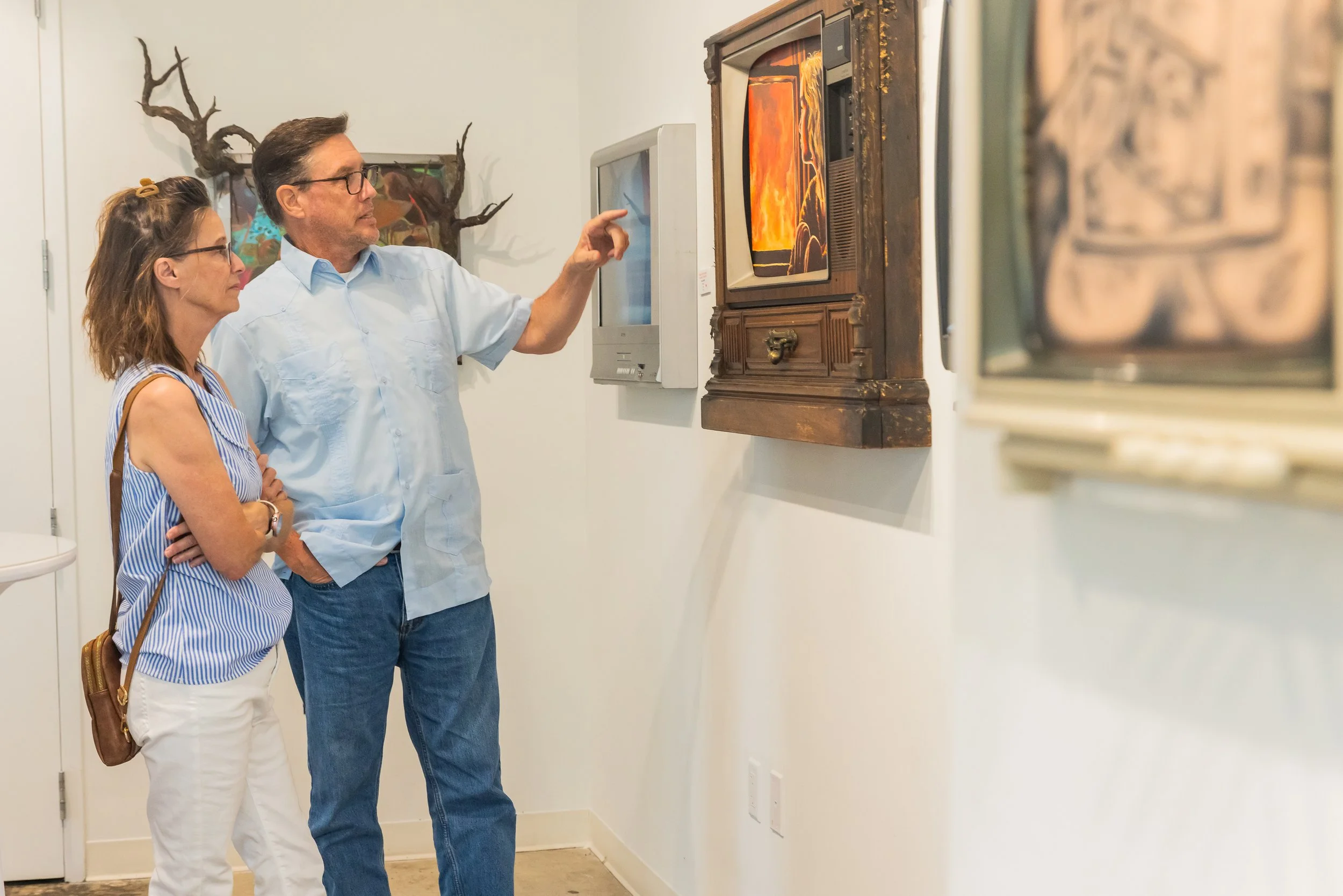
But one big TV had nice fake wood side I just didn't want to cut, so I made a shadowbox scene out of a found pressed board print. As people came over, I was surprise how they gravitated to that one, and I could see I needed to make a lot more TVs with shadowboxes. There are 8 shadowboxes in the show, one of which the artist did themselves.
You were the ideas guy, the artist, and the curator on this all at once. Did those three ever pull you in different directions on the same piece, and if so, which one won?
Jay Schwarzhoff
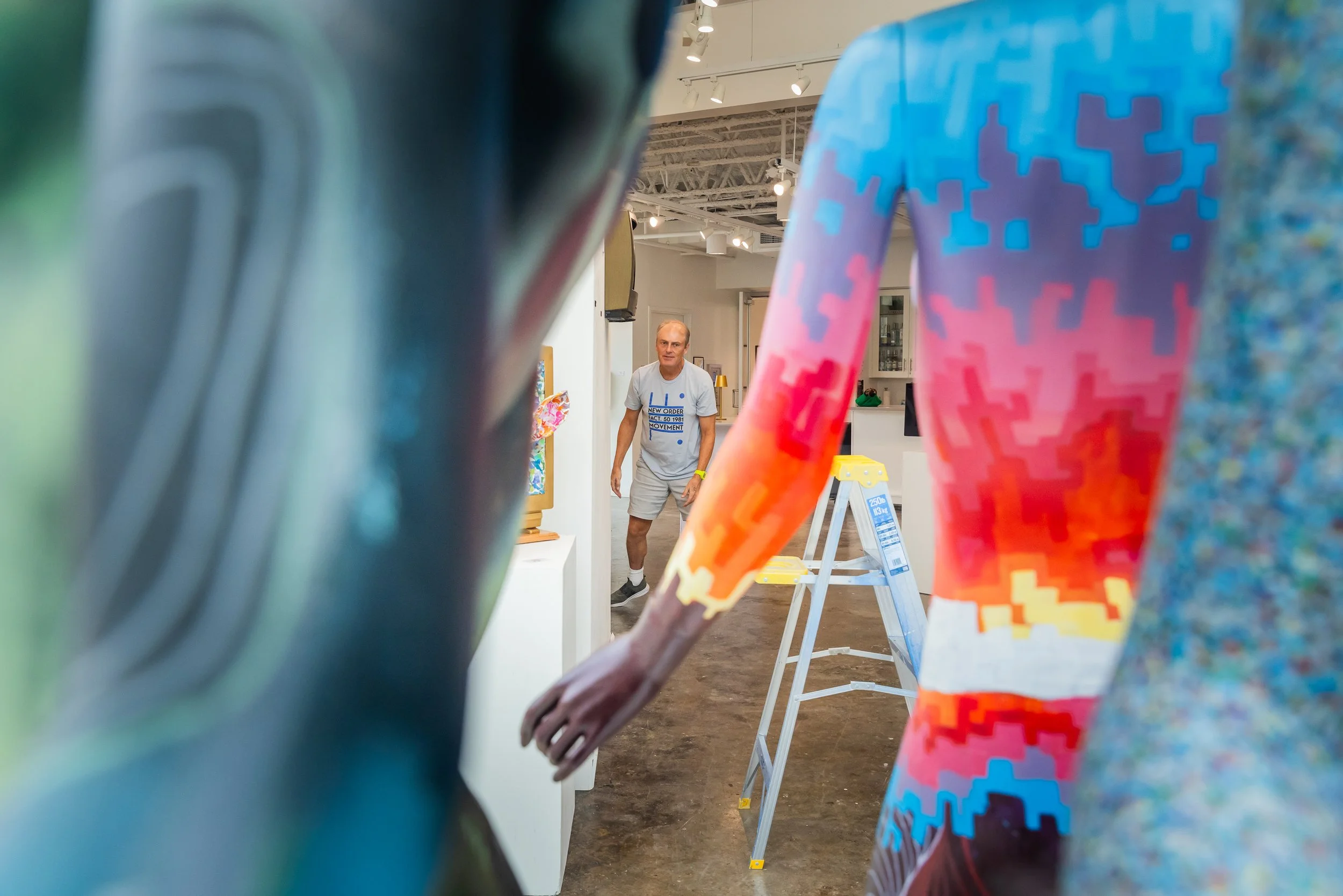
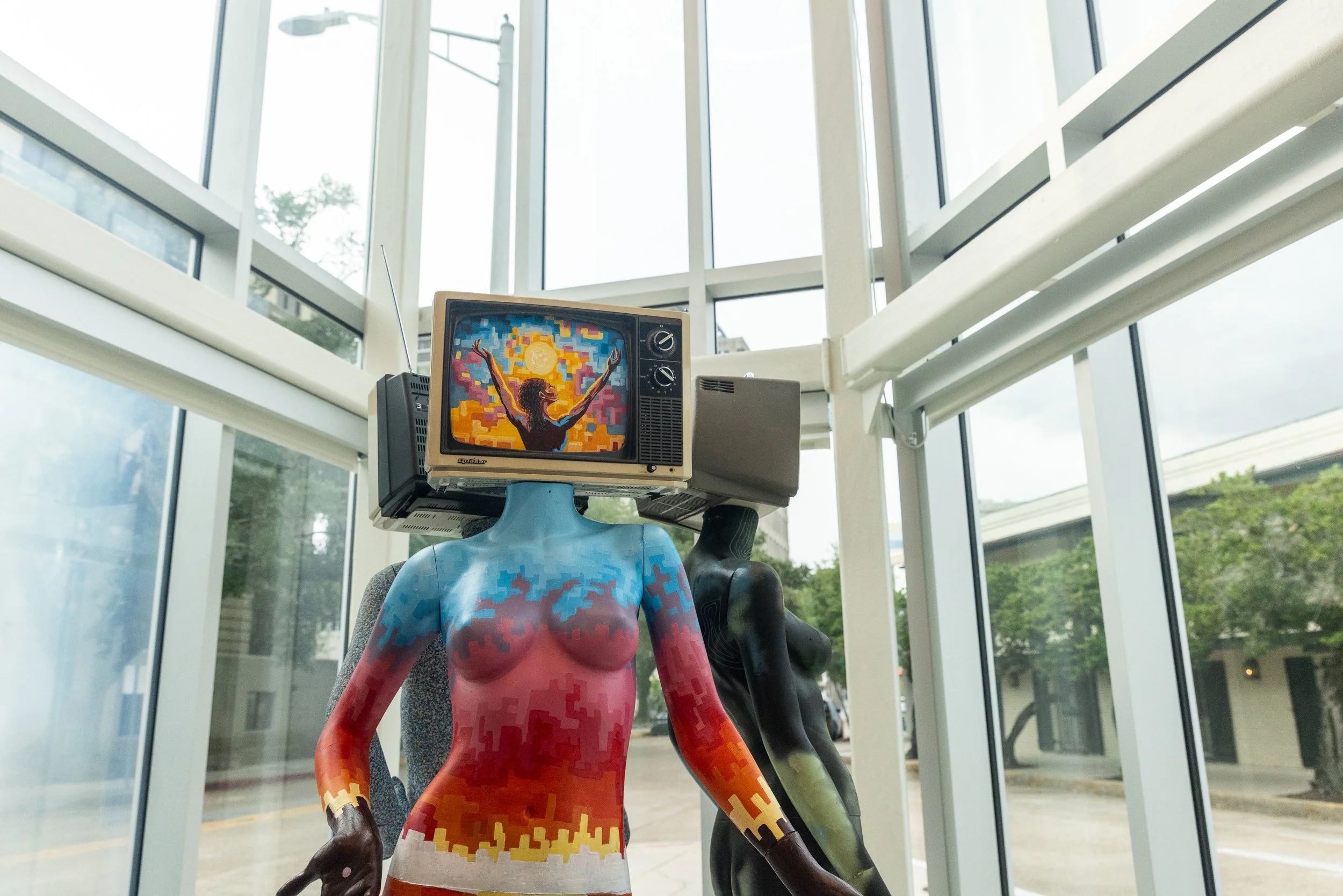
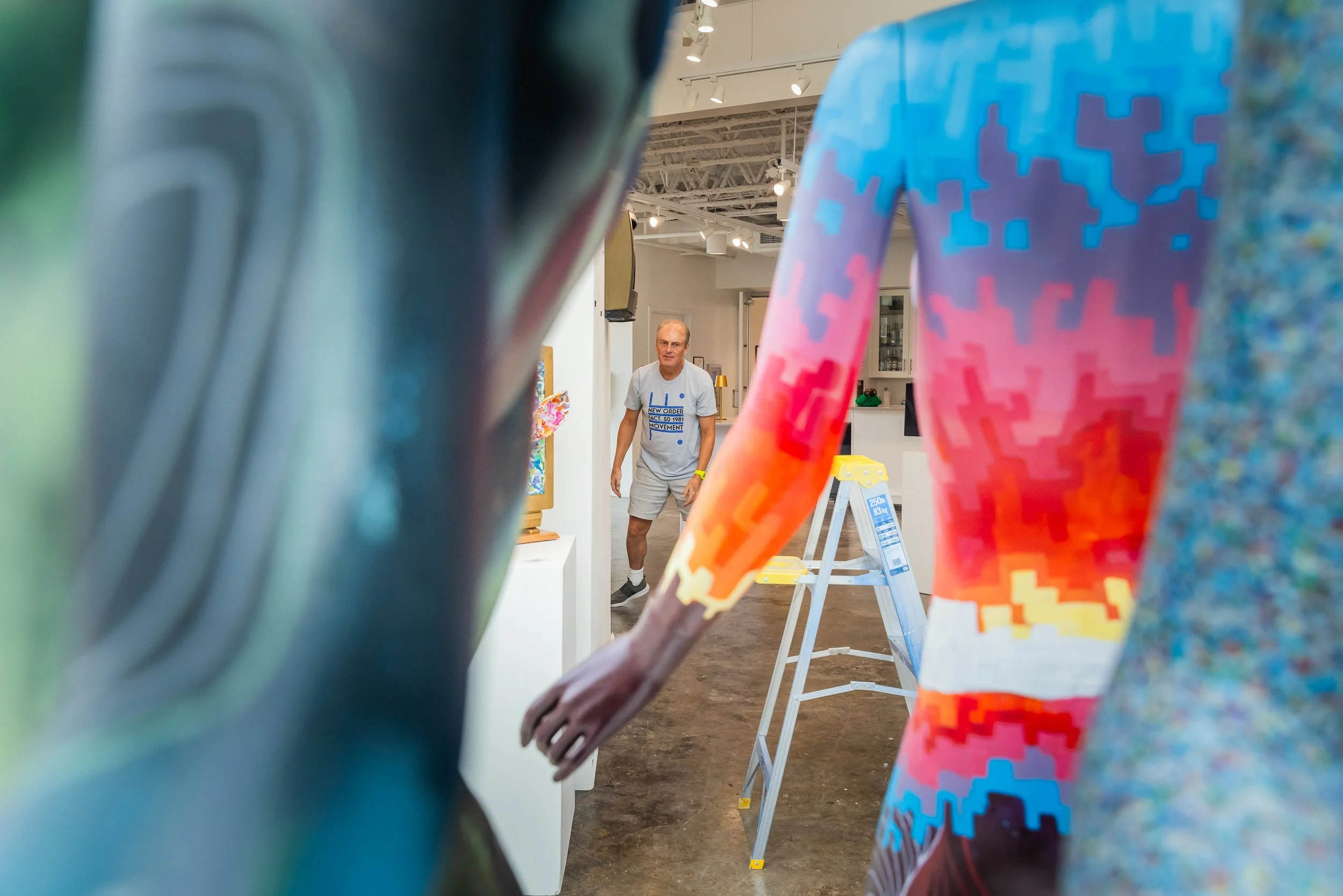
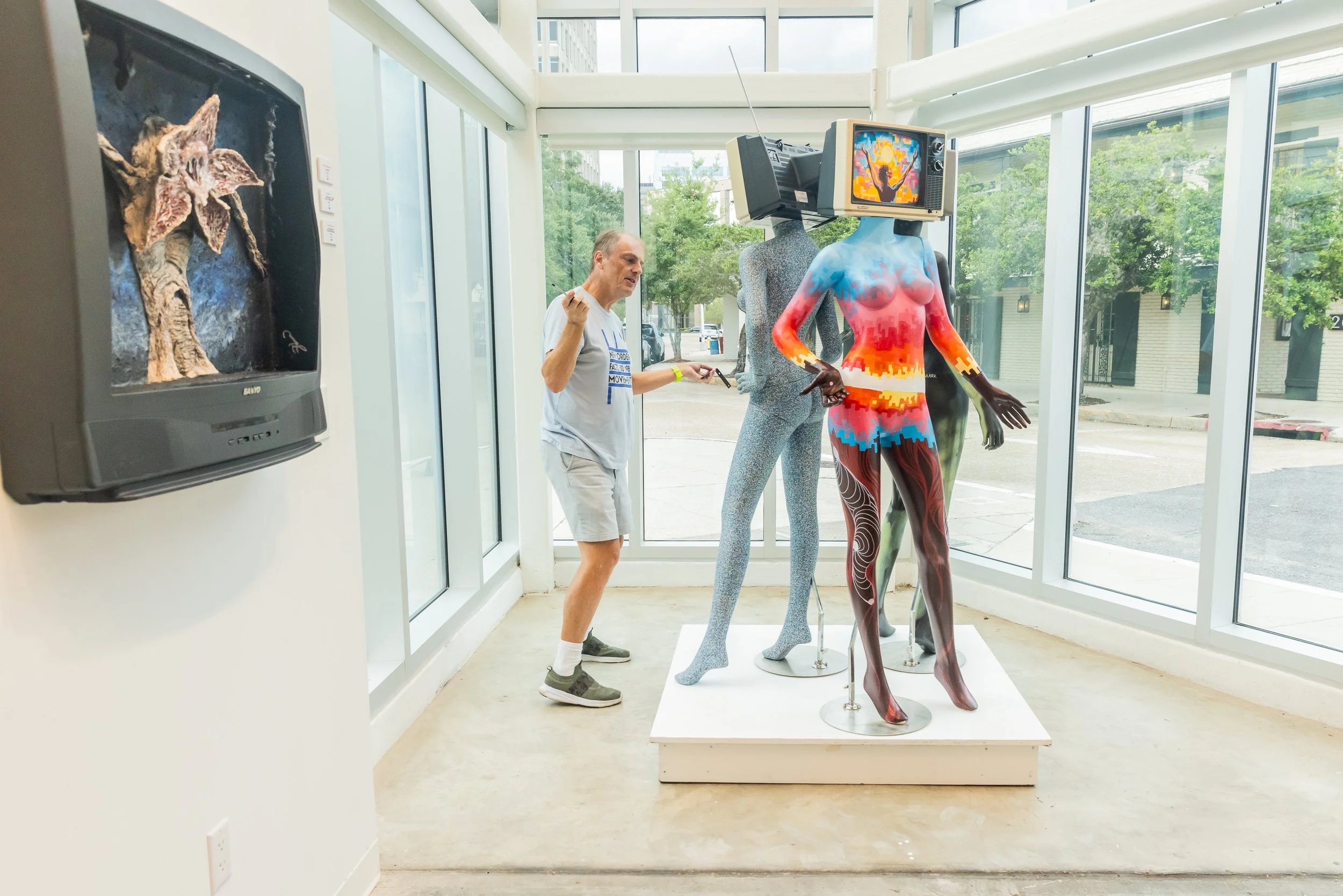
Painting Dottie the mannequin was a close call. I wasn't going to do it, I was going to give out that mannequin to someone else. But I got some motivation from Samantha Combs, looking at her intricate art made of layers of soap. And I decided to reward myself by keeping the mannequin for myself.
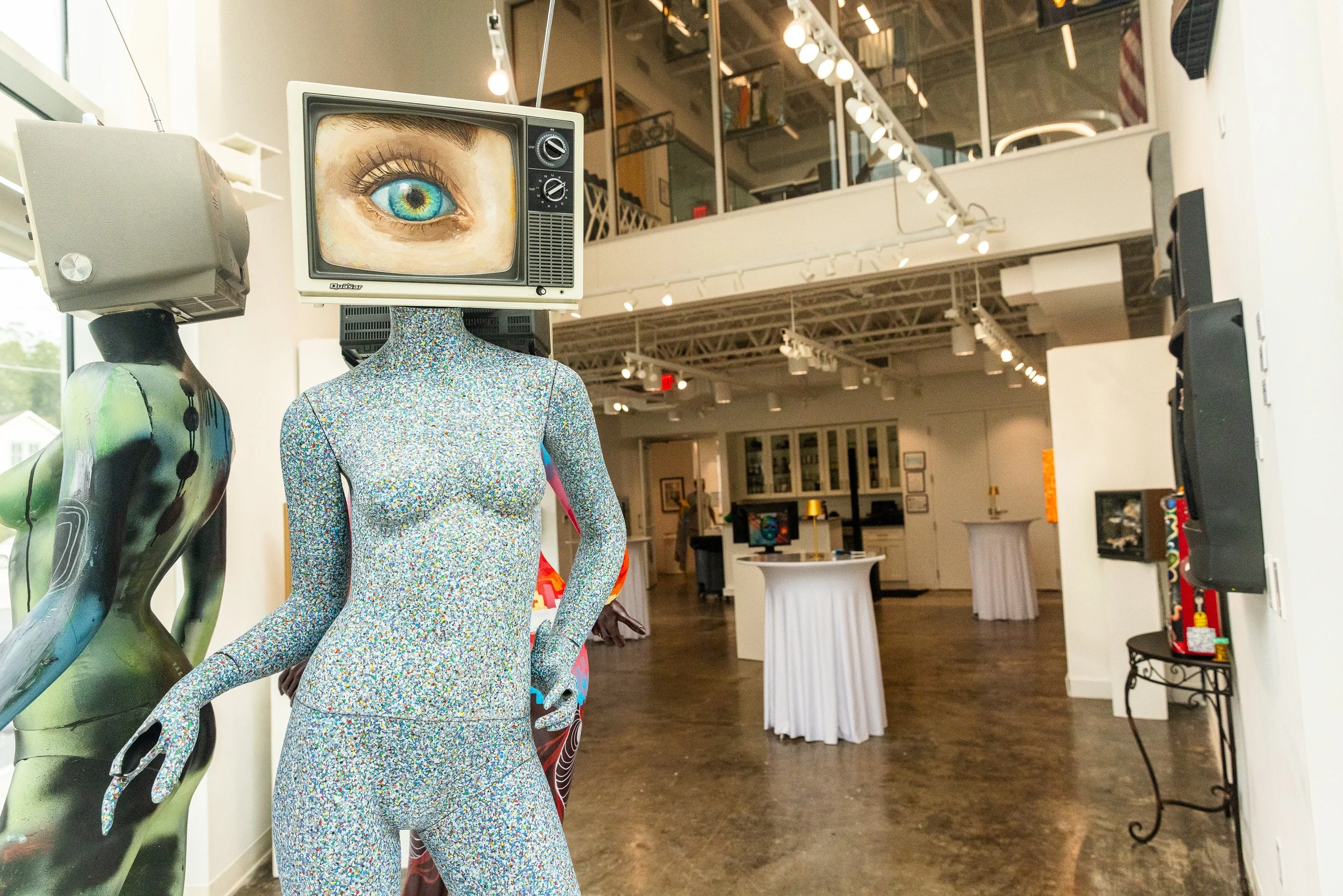
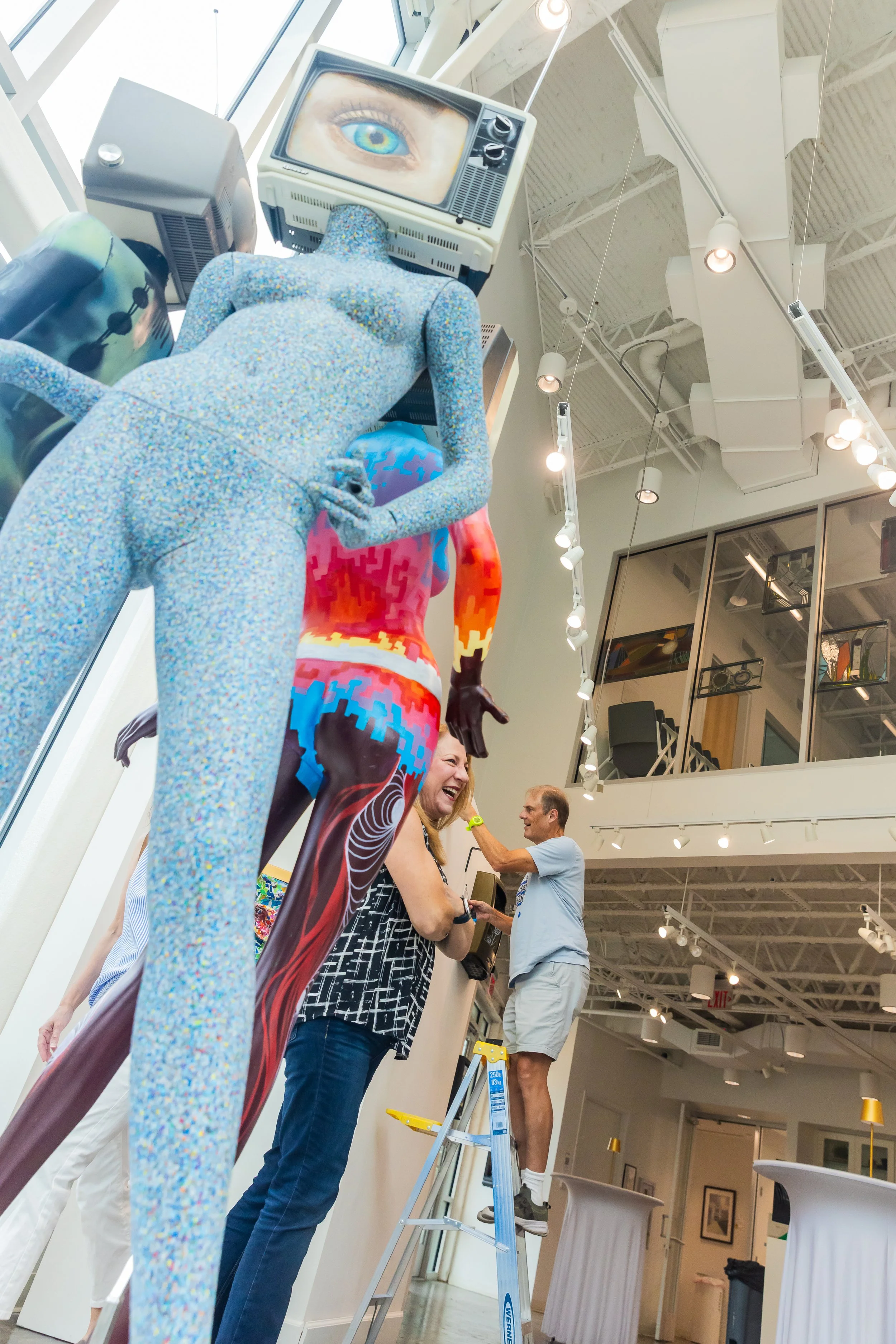
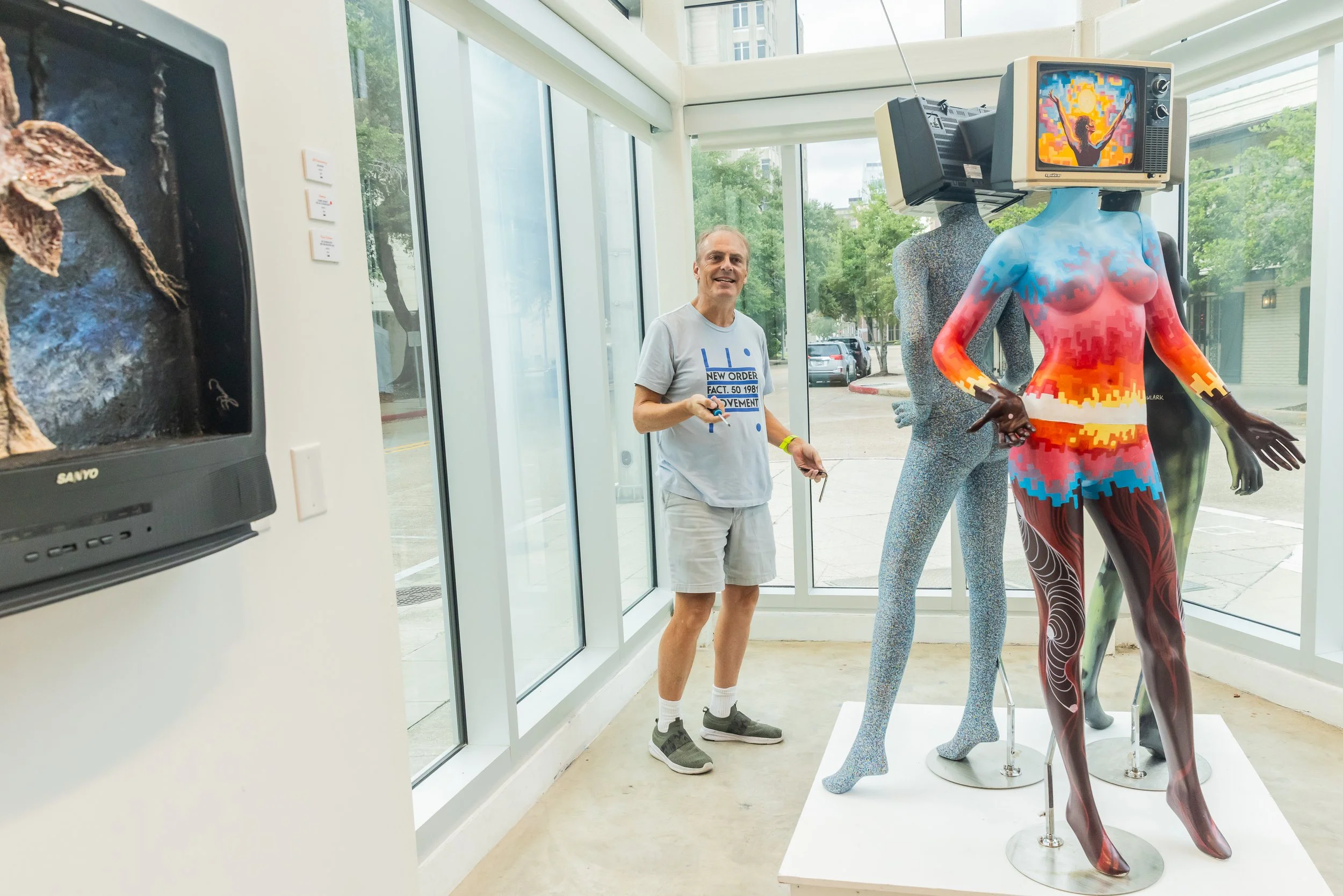
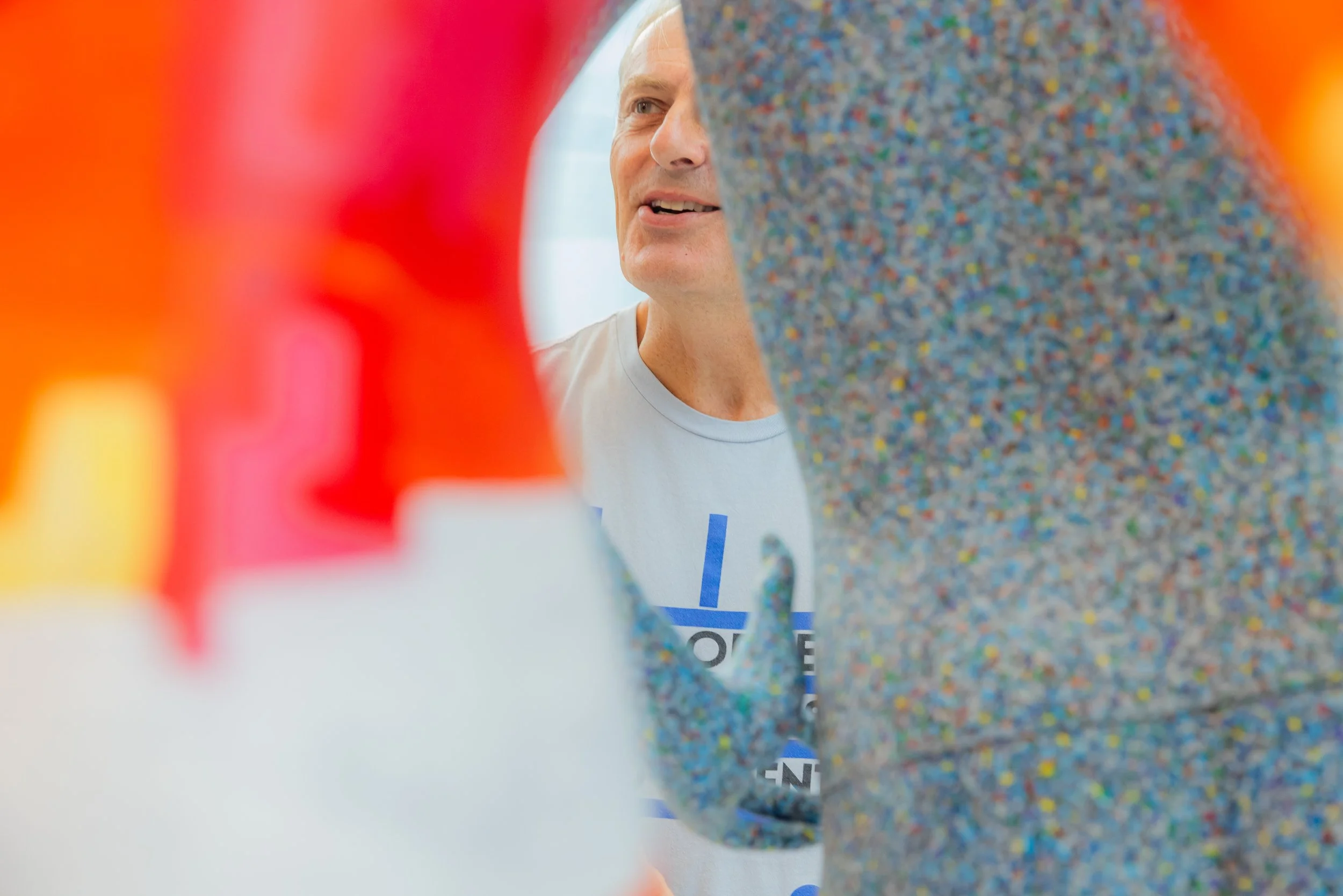
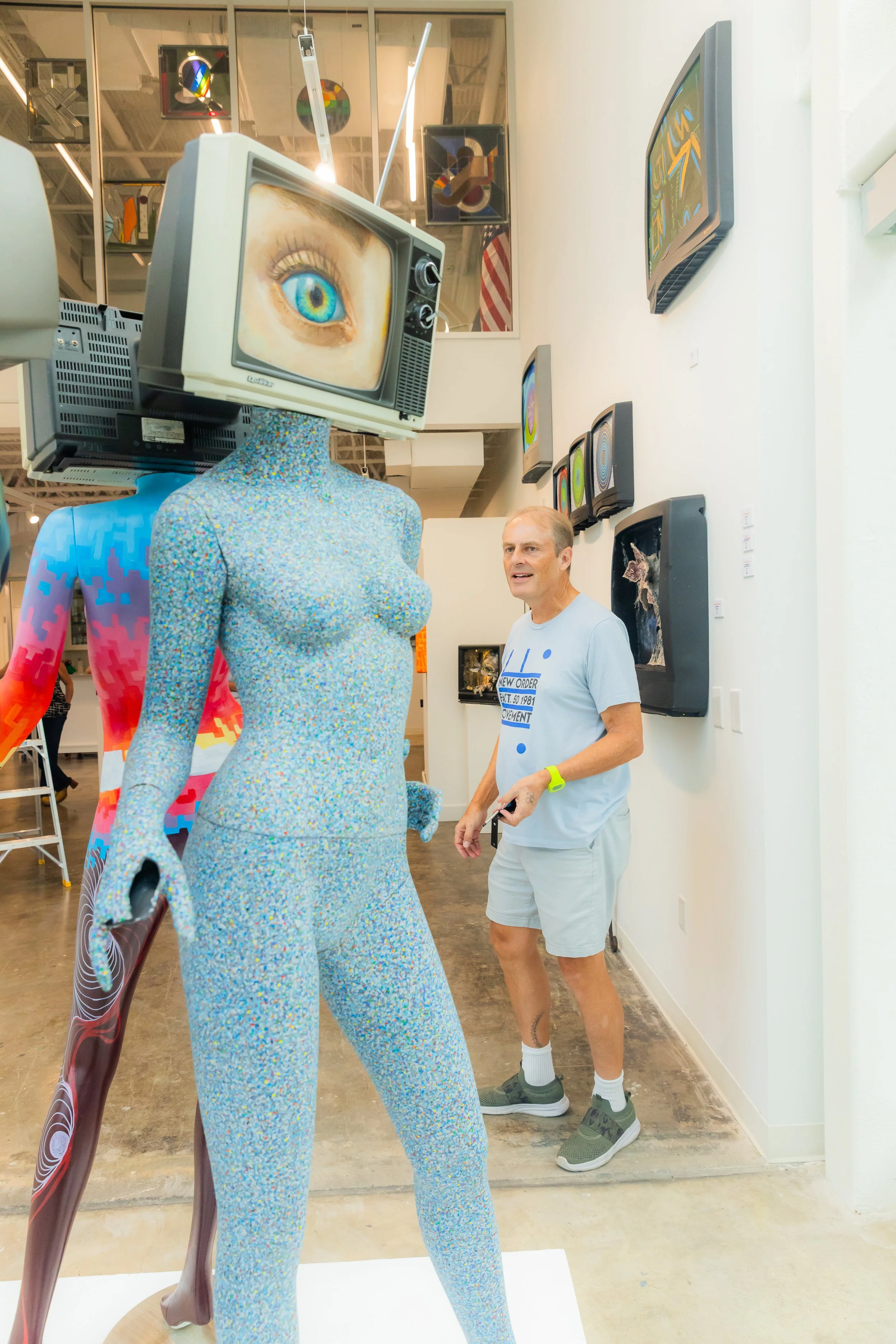
I knew that painting TV static over a whole body was going to be a enormous, and I wasn't going to do anything until I solved the problem of how to mount a TV head. I may have missed my own deadline my a day or two with that one, but midway through I wondered if I'd be better off just punting and put more of my energy into curating.
Was there an idea you had early on, as the "ideas guy," that the curator in you eventually had to say no to?
Jay Schwarzhoff
Dozens. Generally, anything that involved having a working TV I eliminated early on. Or any combinations. I had to remind myself that just because I've been looking at these for years, the idea is new to most people and so they don't need more for it to be special.
Tell me about the piece, or pieces, you actually made yourself. Which one, and what was going on in your head while you were building it?
Jay Schwarzhoff
With "Iris", I replaced the pupil of a huge eye with a TV static silhouette of a woman walking toward you. I like the twilight zone, what is going on here vibe, with breaking the 4th wall of a someone walking toward you, all inside a TV no less.
For the "Pop Culture" items, with a painted record, I wanted the swirly psycho feel, but at the same time be colorful and vibrant. (I'm going to try to do more of these using black light reactive paint.)
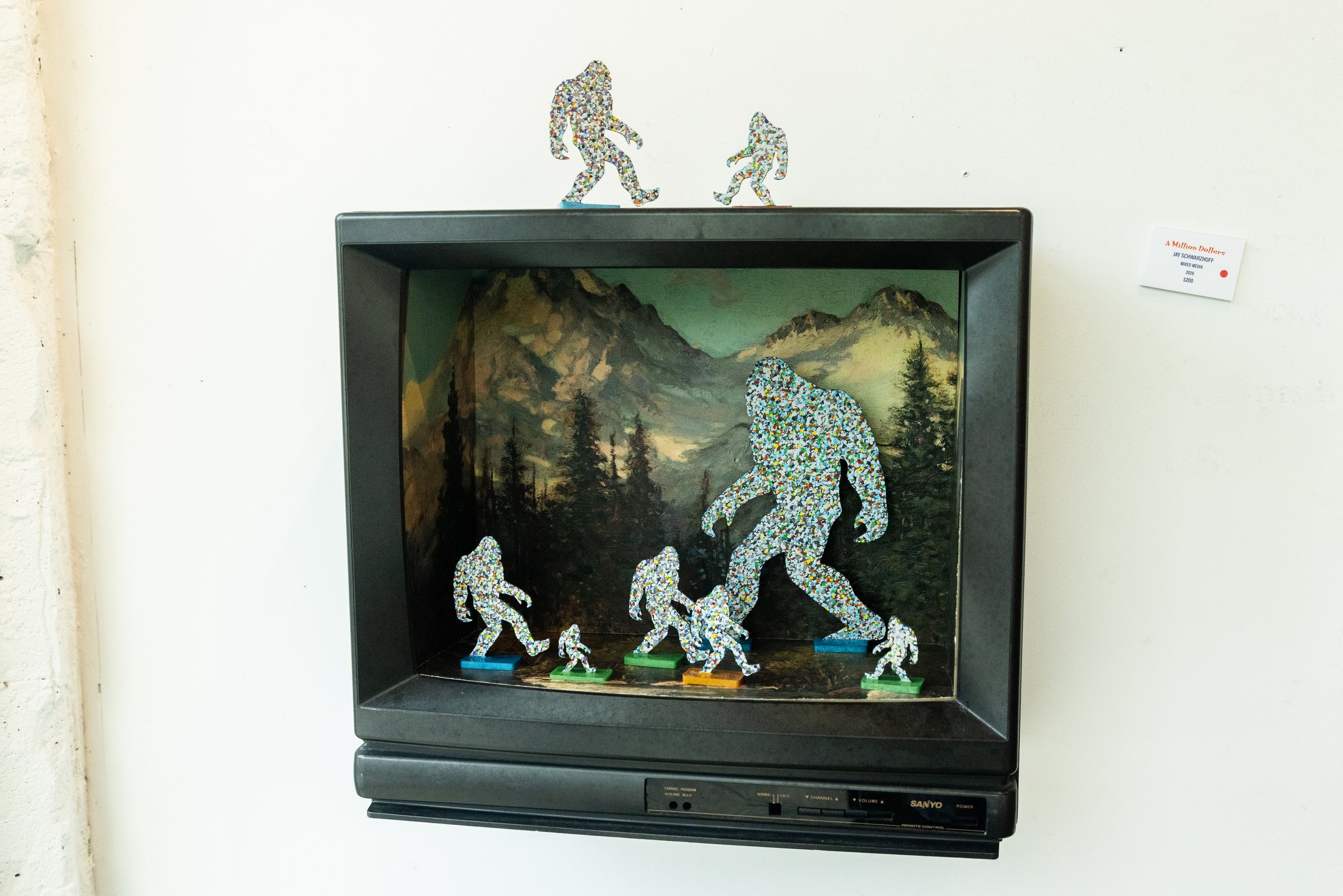
For "A Million Dollars" with the eight TV static sasquatches, I wanted something kids would enjoy while their parents are looking around an art gallery. I've watched exactly that happen multiple times during this show.
Carolyn Schwarzhoff
Okay I LOVE this question, Jenn!! I made the 2nd smallest piece in the gallery...it's a little painting of a sunset in the mountains. Let's just say; I have a lot of skills of which I am VERY confident, but painting is not one of them, although I LOVE to paint anyway.
I used someone else's generic art as a template AND I had a trusted artist friend (John Guillory) come over and help me with parts of it. The thing that was going on in my head when I created it was that it would be hanging in the same exhibit with SO MANY OTHER TALENTED ARTISTS so I'd better do at least a decent job.
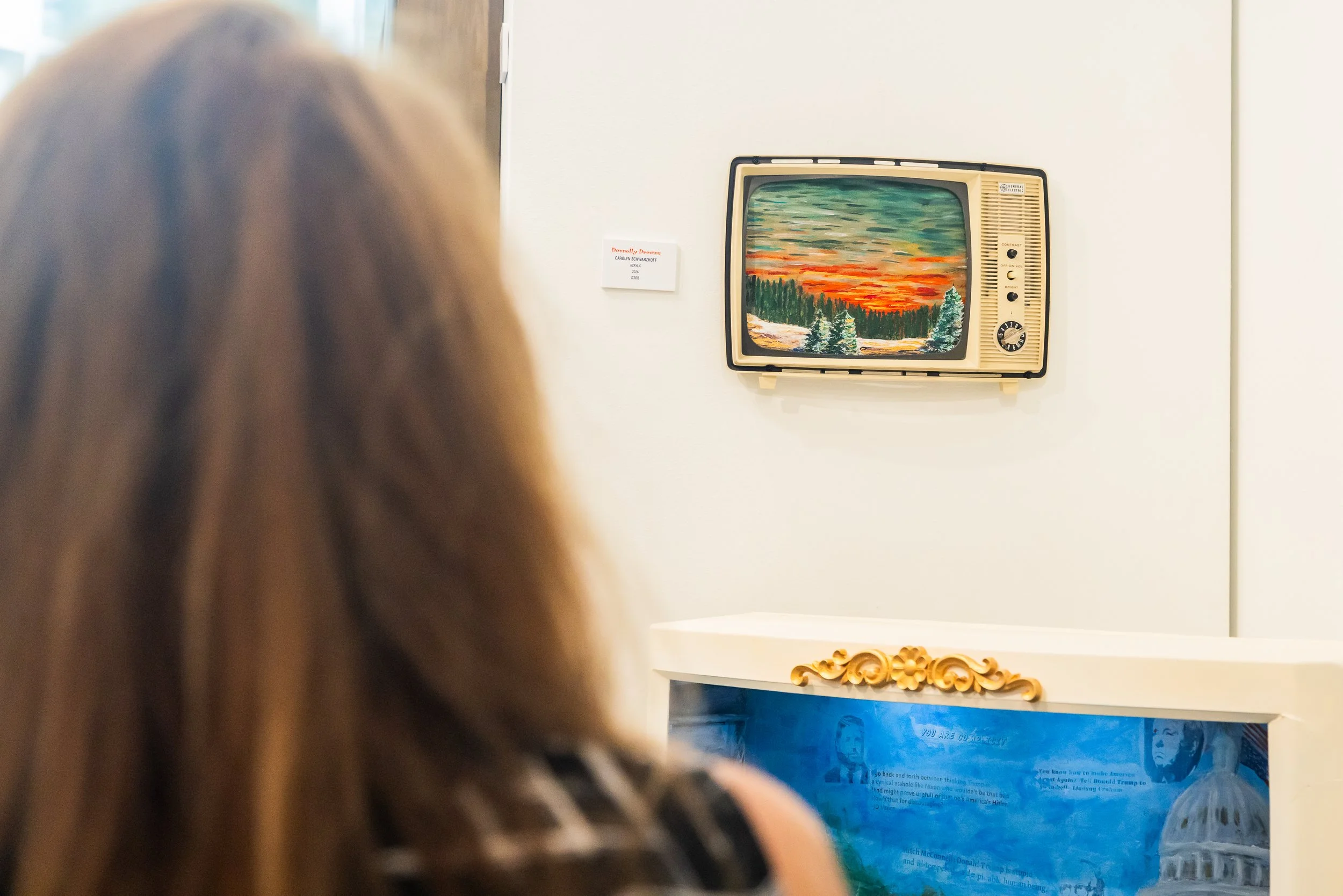
Honestly, I am VERY happy with the way it turned out. I call it "Donnelly Dreams" because it looks like my in-laws cabin view of Donnelly, Idaho. I priced it high enough so that I could either happily welcome it back home if it didn't sell OR I'd make some real money if it did! I'll be very happy either way!
Were any of the pieces collaborations between artists, or was every piece one artist's own? If there was a blend, how did that get decided, who ended up paired up, and why?
Jay Schwarzhoff
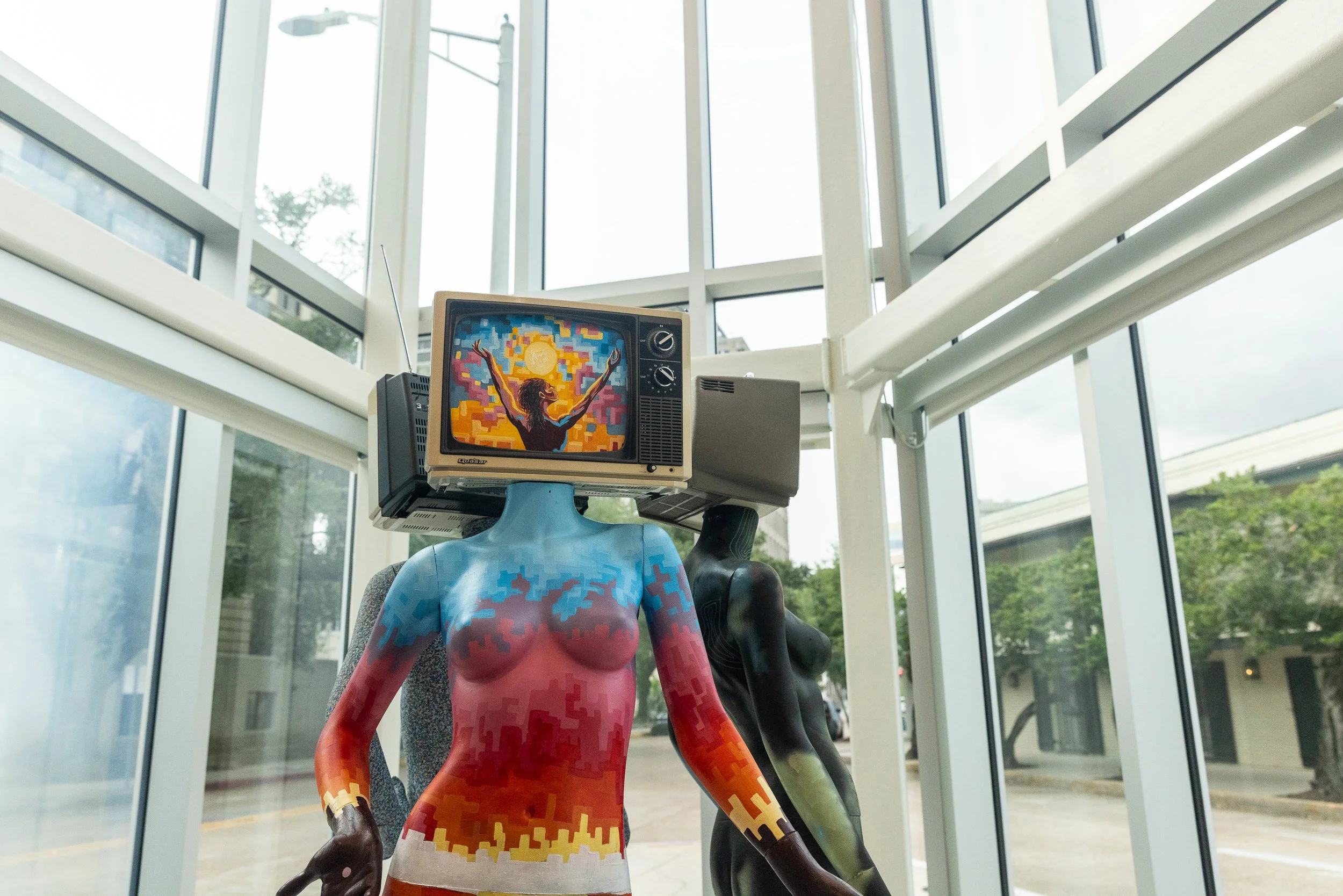
The mannequins were gifted by Kim Meadowlark, which was an amazing, beautiful gift. I wanted to leave one of them as she painted it, so I painted the TV canvas with TV static and a swirly record, but I used colors to match the mannequin. For "Dottie", I painted the body of course, but I asked Jeanne Brandt to paint the eye in the TV canvas, because she is SO GOOD. I told her exactly what I wanted and she delivered even better than what I could have hoped for.
There were two commissions. I commissioned "Scully" by Jess Landry, and I told her exactly what I wanted and she delivered a great piece. I didn't have to change her natural style at all, I had seen her stuff and knew it was a match with a TV frame. I commissioned "Zenith" by Madi Zaine (but I told her that if she wants to take it back, it is OK). In this case, the whole idea of framing a tattoo on practice skin was mine, but after that everything about it is hers.
So, in short, the only collaborations are with me.
Where do you feel ownership in this exhibit, a decision, a piece, or a part of the process that wouldn't exist the way it does without you?
Carolyn Schwarzhoff
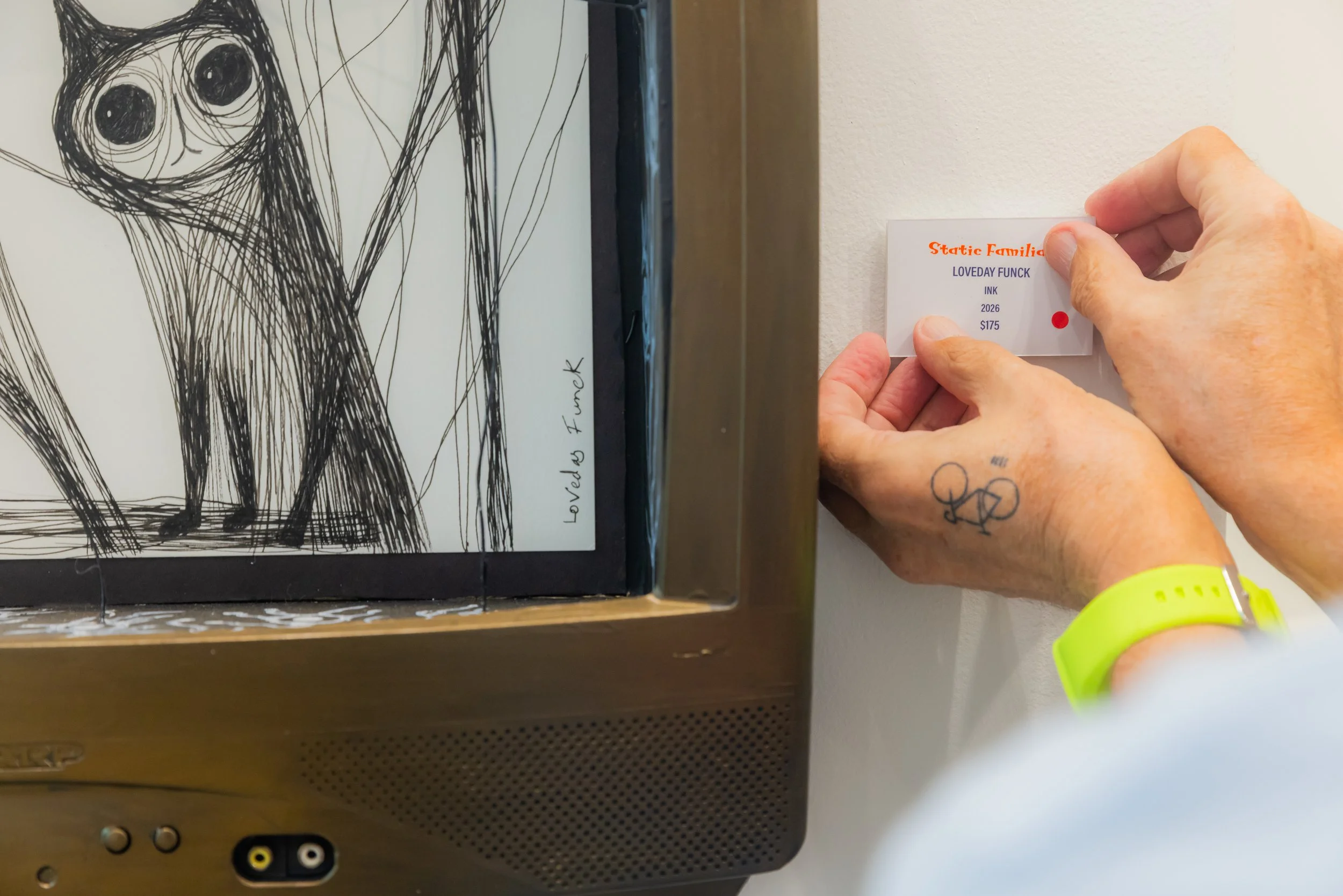
There are really only a few small things I take ownership of... My own painting of a sunset of course, but also small things like helping Jay pick out the orange color of the lettering on the "Tell a Vision" logo and helping him make edits on the art cards when the exhibit got extended.
I also spent a lot of time just talking up the exhibit to friends both in person and on social media. We had fantastic attendance both at the exhibit opening and at First Free Sunday, so I guess that all of us who promoted these events did a pretty good job!
How did you know when to offer an opinion on where things were headed, and when to just let him work it out?
Carolyn Schwarzhoff
Let's just say...I offered a LOT of opinions on a LOT of things, and Jay took some of them and totally rejected others! Ha! I did not always understand his vision on all of the little parts of this exhibit, but I knew all along that this is his baby and I think in the end he made all good choices.
What did supporting Jay through this actually look like, day to day, logistically, emotionally, or both? What did you find yourself doing that no one else saw?
Carolyn Schwarzhoff
I'm not saying it wasn't worth it, but probably the hardest part of this whole thing was the amount of TIME that Jay ended up working on this entire project. So.Much.Time.
Each TV needed to be worked on before handing it over, and then there was a lot of work to do to hang the exhibit, create the show cards, and then make MULTIPLE trips to the library to laser cut and print items that we offered on our First Free Sunday activities. This exhibit has taken over most of his free time for the last 6 months, especially.
That same time could have been spent on projects around the house that are still waiting, or on travel, or even on just relaxing. But this was not going to happen without a lot of time spent putting it together, and it gave us both a LOT of joy, so I think it was the right thing to prioritize and we've both enjoyed the experience SO much. Lots of time spent but no regrets!
Is there a story or a decision from this whole process, big or small, that hasn't come up in any of these questions but feels like it needs to be part of the record?
Jay Schwarzhoff
When we started, we did not know we were going to be in a gallery show. My motivation was to see what these creative people come up with, and I feel very richly rewarded for that.
I got to learn how to use a lasercutter to make the show sign. I learned how to use resin to make bases for the sasquatches to stand. I learned a little about AI. I made show cards and stickers and lanyards. I went to every art event opening I could for the last 8 months and noted what worked and what didn't. (Food does not always work and it is always a challenge.) I learned how to install an exhibit. I learned a tiny bit about how to make social media more promotionally effective. I enjoy all forms of learning, so I have had a lot of fun with this show.
Carolyn Schwarzhoff
Almost every piece of art has a story! SO MANY STORIES!! The painting that it took us a while to "get"....the painting that fell off of the wall during installation.....the painting that was created when somebody was high...the painting that the artist asked her friends to contribute to....the painting where the creator burned the side of the TV to match the painting...the painting that we had to drive to Lake Charles to get.
But the stories are a lot more fun to hear when you are looking at the art so we'd love to tell them to people in person!!
Thanks for being interested!!
If you've got your own project (or pile of TVs) that you just can’t stop daydreaming about, let's talk about how to make it happen.
I partner 1:1 with creatives, founders, and community organizers in my ClarityLAB sessions, where your vision turns into actions that build a movement.
Find out more about my coaching services: ClarityLAB 1:1 Sessions
A 360 virtual tour of the exhibit, made by Jay and Carolyn, with a cameo from their pup Agnes!
It’s worth seeing the cuteness of the Agnes! And the art, of course the art!
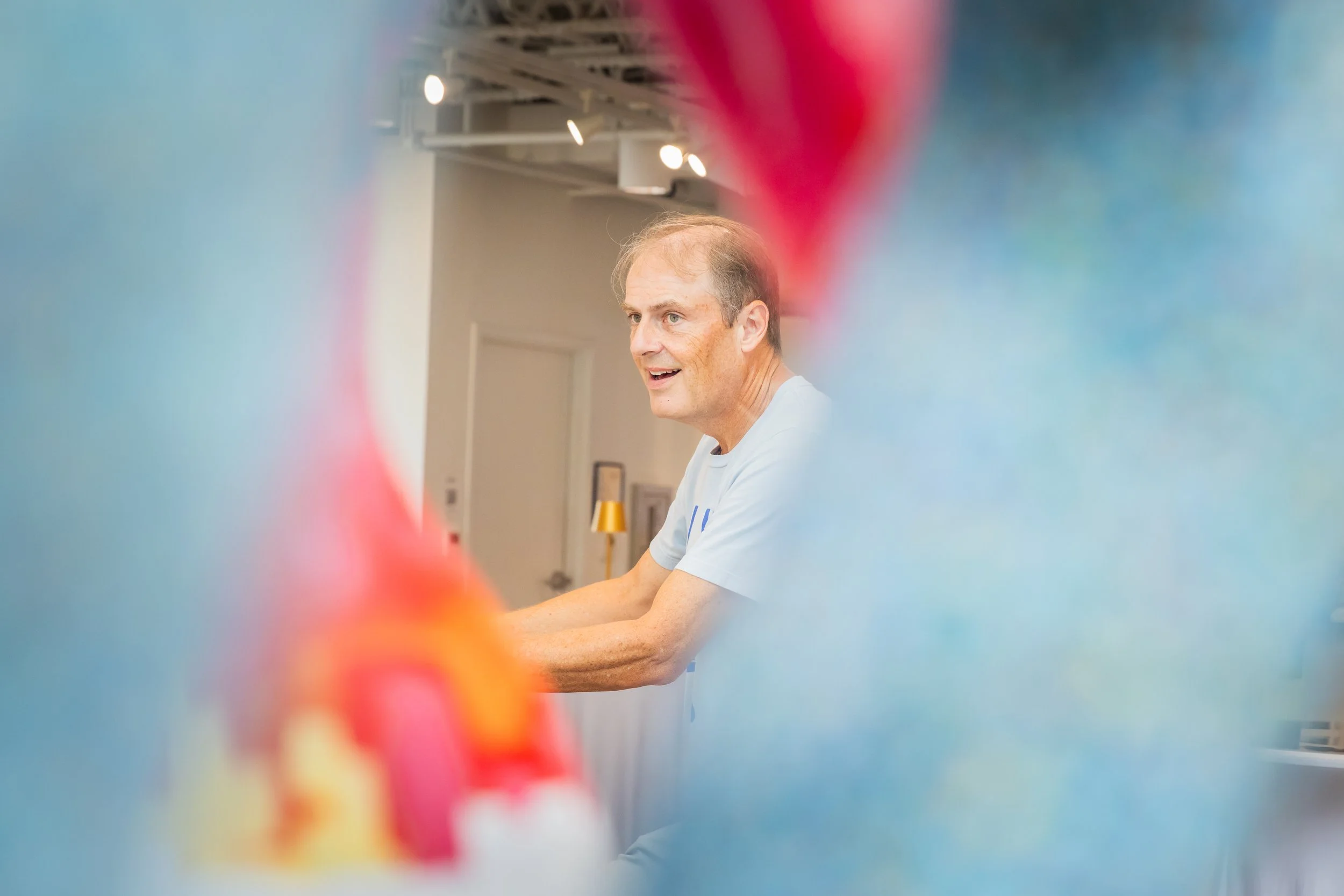
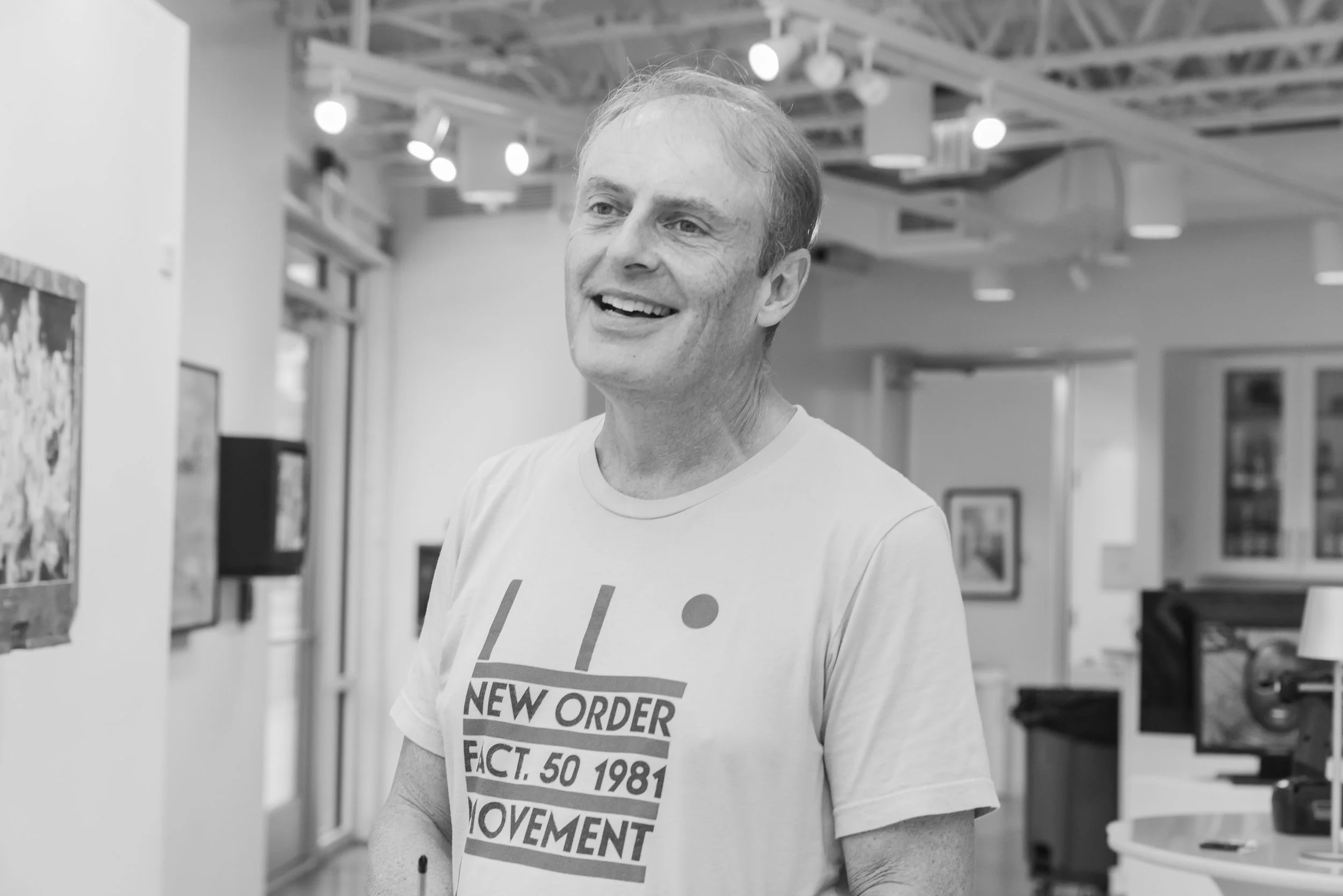
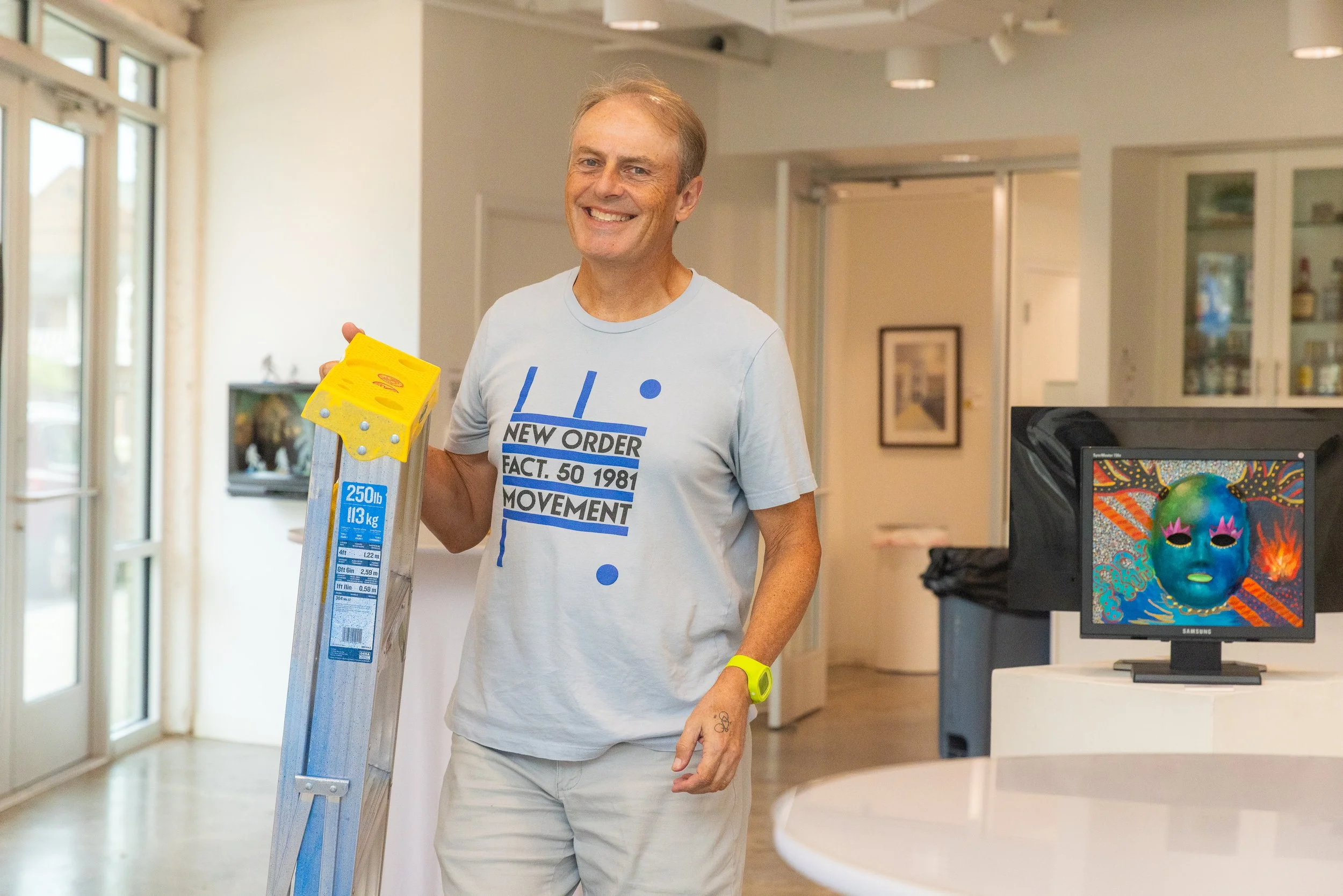
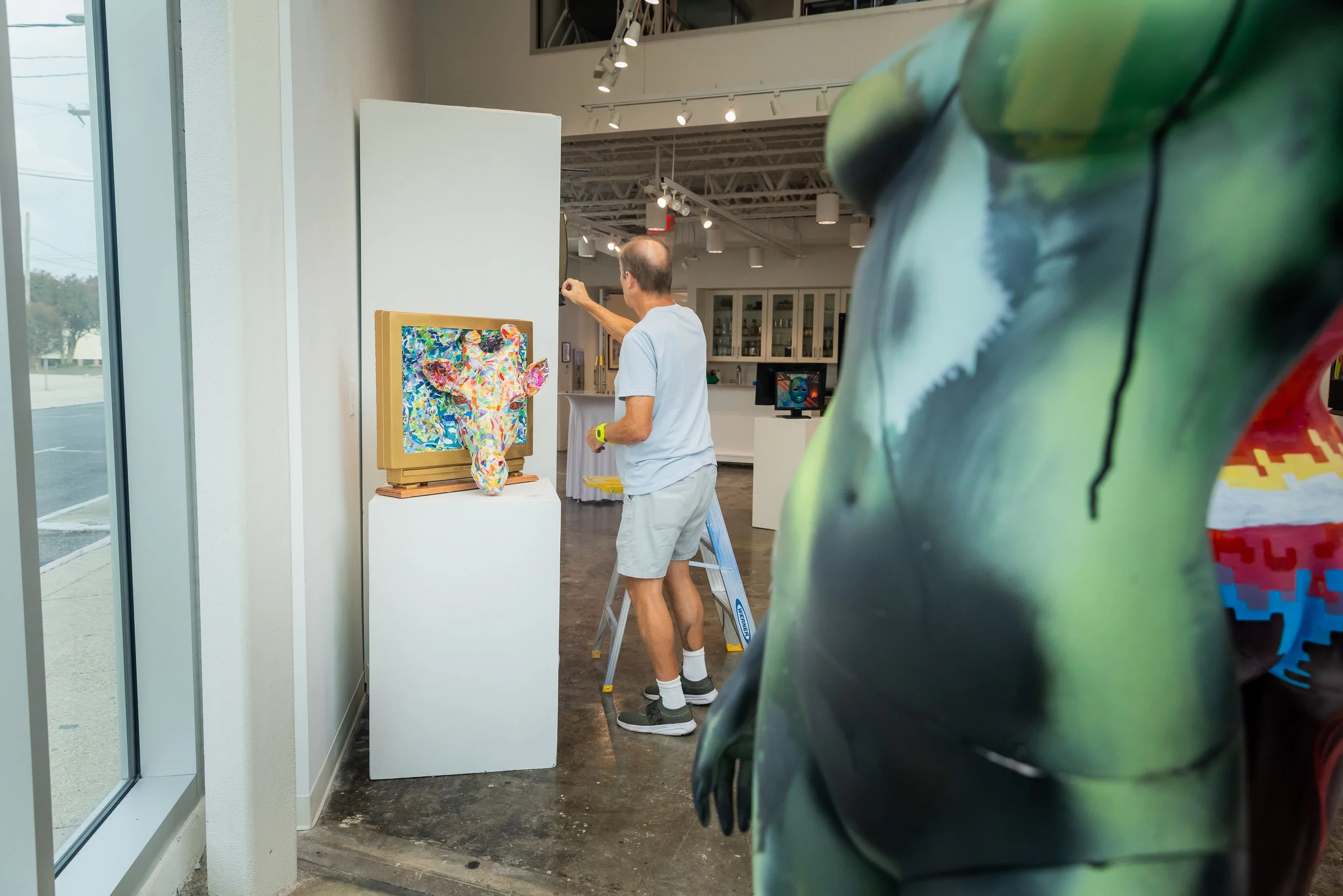
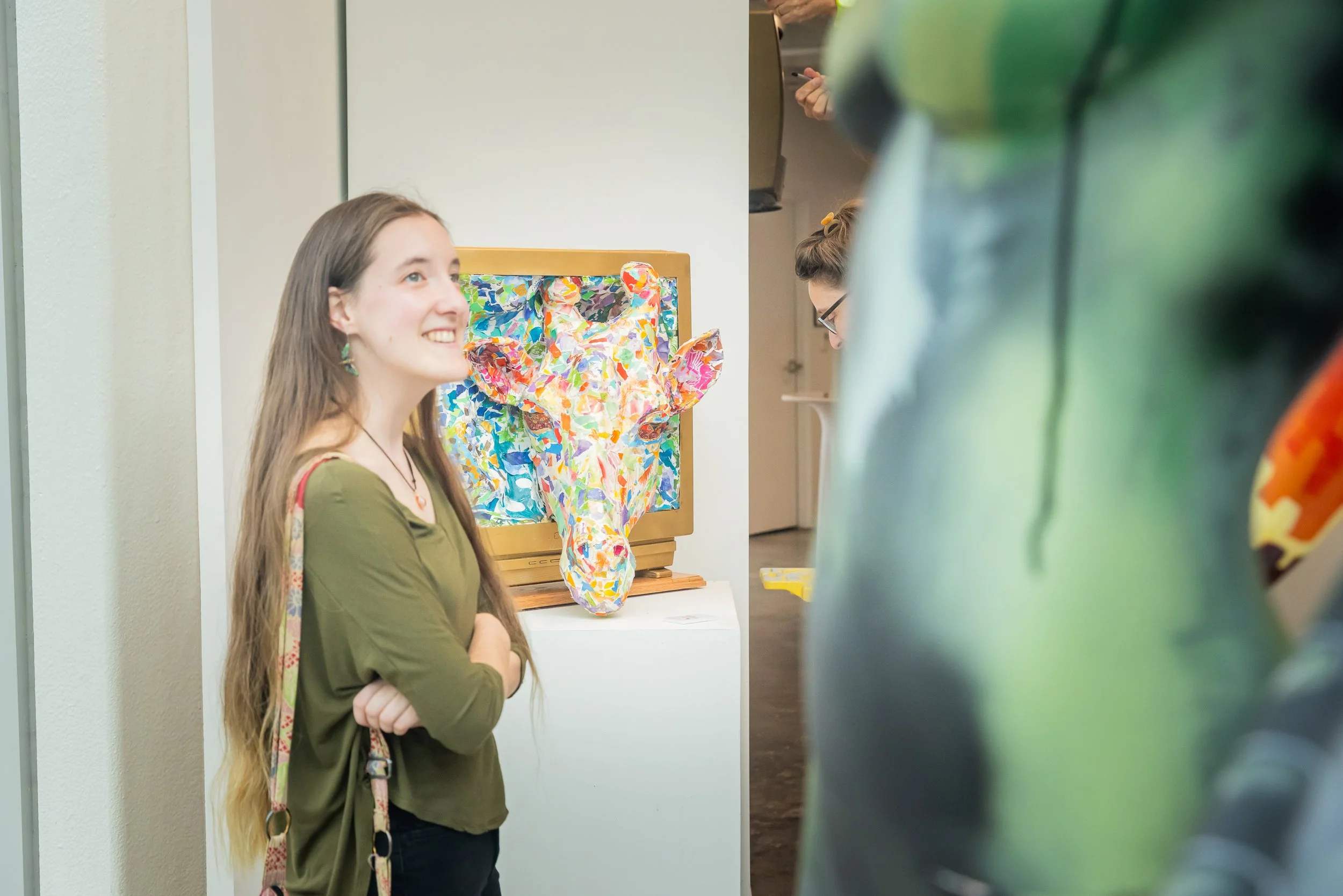
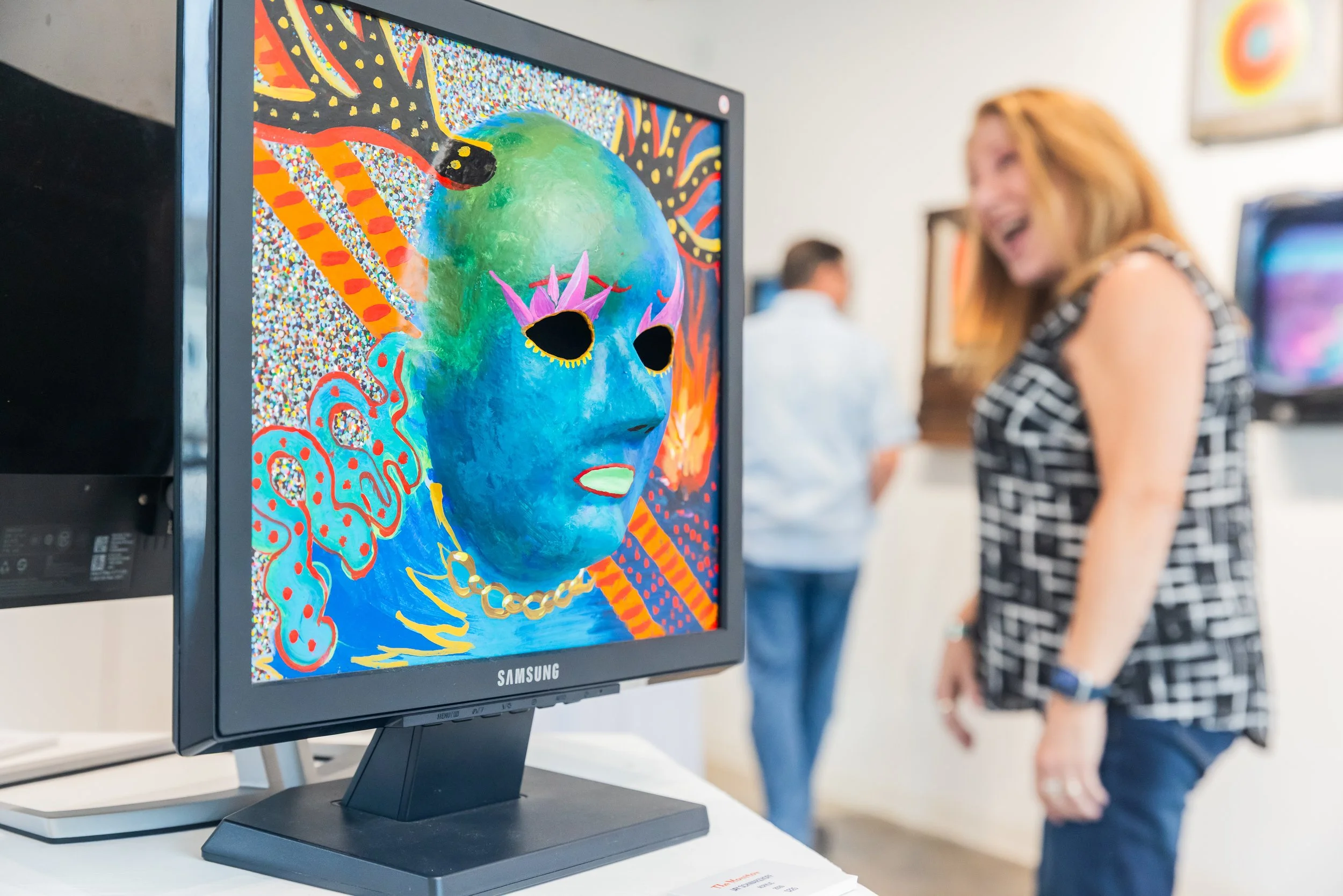
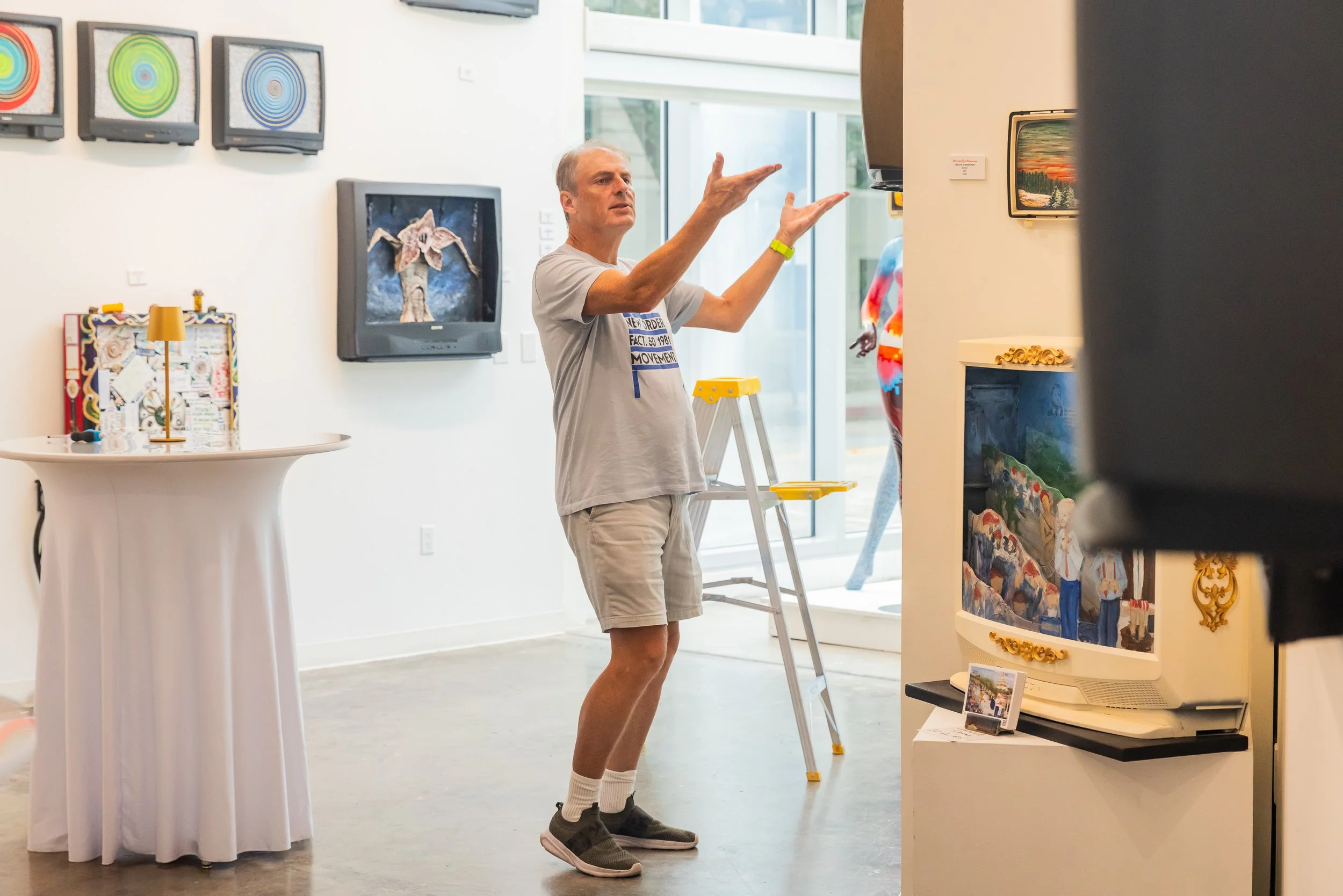
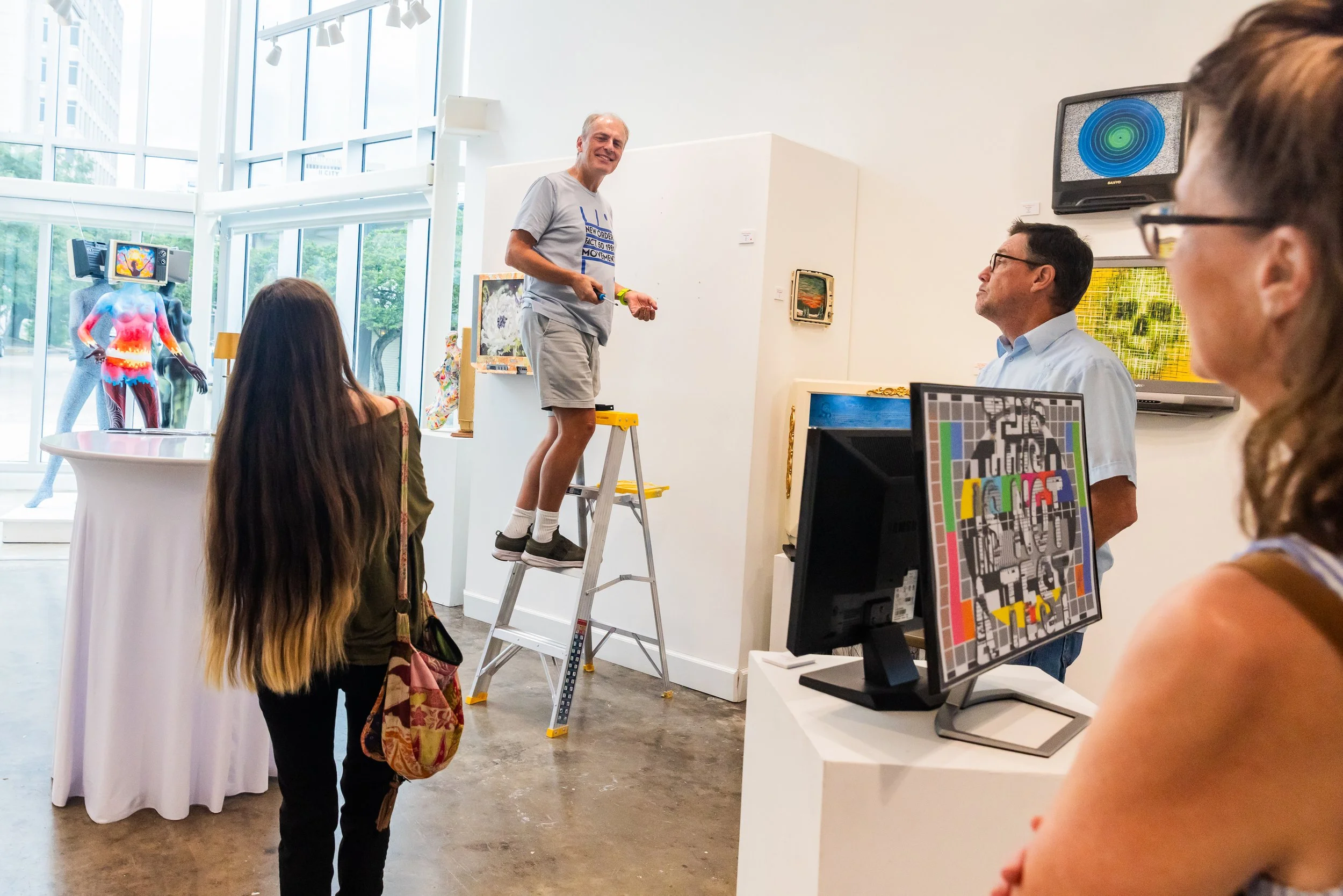
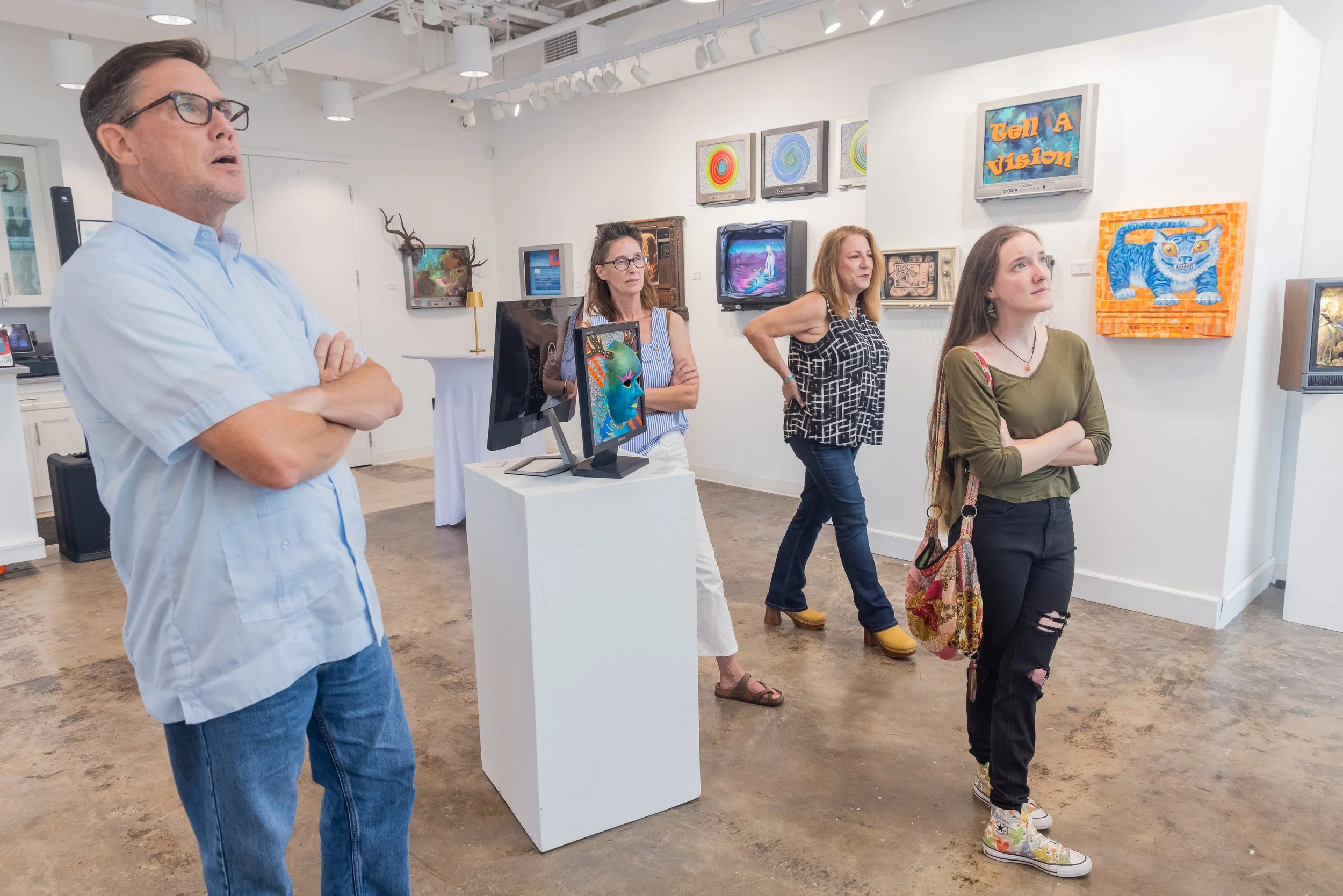
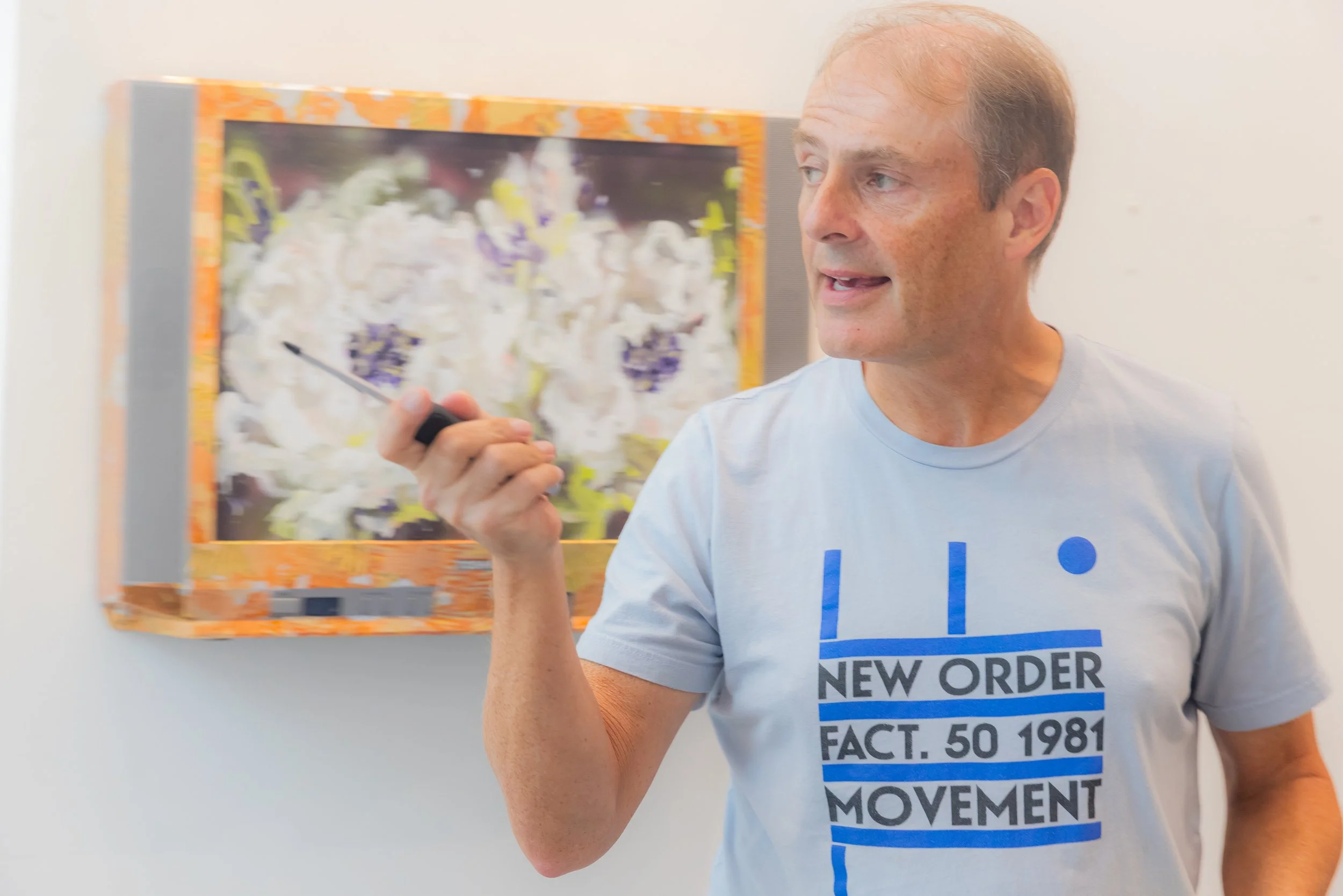
These photographs were taken during a private, after hours viewing of "Tell A Vision" given by Jay and Carolyn Schwarzhoff to Sid Bailey, Natasha Walsh Bailey, and Emily Bailey (daughter), all of whom appear in these images.
Photos taken by Jenn Ocken © 2026 for this article. To inquire about additional usage, contact 225-590-3731 or info@jennockenphotography.com.
